415 sites found

UNESCO
Brihadisvara Temple
Thanjavur, Tamil Nadu
Chola11th Century CE
Built by Raja Raja Chola I, this temple is one of the largest and tallest temples in India. The vimana (tower) rises to 66 meters and is topped by a single granite stone weighing approximately 80 tons, placed without the aid of modern machinery.
S
Shiva (Brihadisvara)
UNESCO
Konark Sun Temple
Konark, Odisha
Eastern Ganga13th Century CE
Designed as a colossal chariot of the Sun God with 24 elaborately carved wheels and drawn by 7 horses. The temple represents the pinnacle of Kalinga architecture and is famous for its exquisite stone carvings depicting every aspect of life.
S
Surya (Sun God)
Modhera Sun Temple
Modhera, Gujarat
Solanki11th Century CE
Built by King Bhimdev I of the Solanki dynasty, this temple is designed so that the first rays of the rising sun illuminate the sanctum. The complex includes a stunning stepped tank (Surya Kund) with 108 miniature shrines.
S
Surya (Sun God)R
UNESCO
Rani ki Vav
Patan, Gujarat
Solanki11th Century CE
Built by Queen Udayamati in memory of her husband Bhimdev I, this is one of the finest stepwells in India. The seven-story structure descends 30 meters and features over 1500 sculptures depicting religious, mythological, and secular imagery.
V
Various (primarily Vishnu avatars)G
UNESCO
Gangaikonda Cholapuram Temple
Gangaikonda Cholapuram, Tamil Nadu
Chola11th Century CE
Built by Rajendra Chola I to commemorate his victorious march to the Ganges, this temple is modelled after the Thanjavur Brihadisvara but with a more graceful curvilinear vimana. The city served as the Chola capital for over 250 years.
S
Shiva (Brihadisvara)A
UNESCO
Airavatesvara Temple
Darasuram, Tamil Nadu
Chola12th Century CE
Built by Rajaraja Chola II, this exquisite temple is smaller than the other Great Living Chola Temples but surpasses them in sculptural detail. The front mandapa is designed as a stone chariot drawn by horses, and the steps produce musical notes when tapped.
S
Shiva (Airavatesvara)N
Nataraja Temple
Chidambaram, Tamil Nadu
Chola10th - 13th Century CE
One of the most sacred Shaiva temples, Chidambaram is the only temple where Shiva is represented as the cosmic dancer Nataraja in the main sanctum. It is the center of the Pancha Bhuta Stalam representing Akasha (ether/space). The temple is managed by a hereditary community of Dikshitars.
S
Shiva (Nataraja - Cosmic Dancer)
UNESCO
Shore Temple
Mahabalipuram, Tamil Nadu
Pallava8th Century CE
One of the oldest structural stone temples in South India, the Shore Temple was built by Pallava king Rajasimha (Narasimhavarman II). Standing on the edge of the Bay of Bengal, it originally consisted of a complex with two Shiva shrines and one Vishnu shrine, and is believed to be the last of the legendary Seven Pagodas.
S
Shiva and VishnuK
Kailasanathar Temple
Kanchipuram, Tamil Nadu
Pallava8th Century CE
The oldest structural temple in Kanchipuram, built by Pallava king Rajasimha. This temple is a masterpiece of Pallava architecture with its sandstone construction, elaborate sculptural panels, and 58 small shrines lining the inner courtyard wall. It served as a model for later Dravidian temples including the Kailasanatha at Ellora.
S
Shiva (Kailasanathar)P
UNESCO
Pancha Rathas
Mahabalipuram, Tamil Nadu
Pallava7th Century CE
Five monolithic temples carved from a single granite outcrop during the reign of Narasimhavarman I (Mamalla). Each ratha is named after a Pandava or Draupadi and represents a different style of temple architecture, serving as experimental prototypes for later structural temples.
V
Various (Shiva, Vishnu, Durga, Indra)V
UNESCO
Varaha Cave Temple
Mahabalipuram, Tamil Nadu
Pallava7th Century CE
A rock-cut cave temple featuring four large relief panels depicting Vishnu in his Varaha (boar) and Trivikrama (three-stride) avatars, as well as Gajalakshmi and Durga. The panels are considered among the finest examples of Pallava art.
V
Vishnu (Varaha avatar)
UNESCO
Chennakesava Temple
Belur, Karnataka
Hoysala12th Century CE
Commissioned by King Vishnuvardhana to celebrate his victory over the Cholas at Talakad in 1116 CE, this temple took 103 years to complete. Every inch of the exterior is covered with intricate carvings of Hindu deities, dancing figures, animals, and ornamental motifs in soapstone.
V
Vishnu (Chennakesava)H
UNESCO
Hoysaleswara Temple
Halebidu, Karnataka
Hoysala12th Century CE
A twin-shrine (dvikuta) temple dedicated to Shiva, built by Ketamalla, a minister of King Vishnuvardhana. Despite being left incomplete (the towers were never built), it is considered the finest example of Hoysala art for its extraordinary sculptural density and narrative friezes.
S
Shiva (Hoysaleswara and Shantaleshwara)K
Kesava Temple
Somanathapura, Karnataka
Hoysala13th Century CE
Built by Somanatha, a general of King Narasimha III, this is the most complete surviving Hoysala temple. It features a trikuta (triple shrine) plan on a star-shaped platform, with all three towers intact. Every surface is covered with sculptural narratives from Hindu epics.
V
Vishnu (Keshava, Janardhana, Venugopala)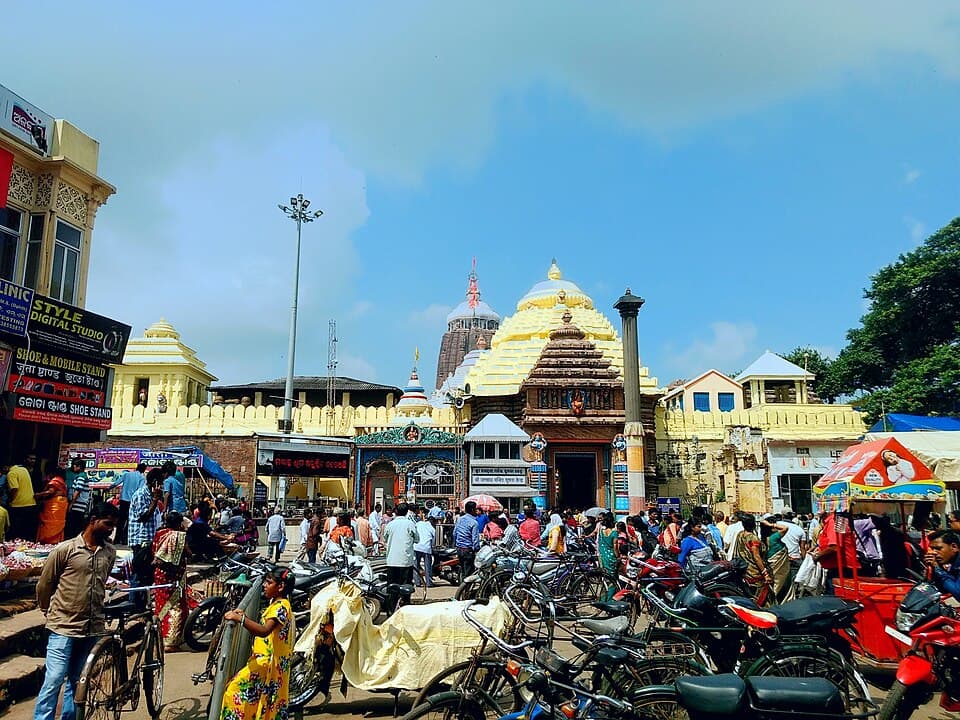
Jagannath Temple
Puri, Odisha
Eastern Ganga12th Century CE
One of the Char Dham pilgrimage sites, the Jagannath Temple was built by Anantavarman Chodaganga and completed by Anga Bhima Deva. It is famous for the annual Rath Yatra festival when massive wooden chariots carry the deities through the streets, a tradition that gave English the word "juggernaut".
V
Vishnu (Jagannath, with Balabhadra and Subhadra)L
Lingaraja Temple
Bhubaneswar, Odisha
Eastern Ganga11th Century CE
The largest and most important temple in Bhubaneswar, the Lingaraja Temple is considered the finest example of mature Kalinga architecture. The deity is worshipped as both Shiva and Vishnu (Hari-Hara), symbolizing the unity of the two traditions. The temple complex includes over 100 subsidiary shrines.
S
Shiva (Lingaraja / Hari-Hara)M
Mukteshvara Temple
Bhubaneswar, Odisha
Eastern Ganga10th Century CE
Often called the "Gem of Odishan architecture," the Mukteshvara Temple marks the transition from early to mature Kalinga style. Its most distinctive feature is the ornamental torana (arched gateway), the only one of its kind in Odisha, showing possible Buddhist influence.
S
Shiva (Mukteshvara)B
Badami Cave Temples
Badami, Karnataka
Chalukya6th Century CE
A complex of four rock-cut cave temples carved into the red sandstone cliffs of Badami (ancient Vatapi), the Chalukya capital. Cave 1 is dedicated to Shiva, Caves 2 and 3 to Vishnu, and Cave 4 is a Jain temple. Cave 3, the largest and most ornate, is dated by inscription to 578 CE.
V
Various (Shiva, Vishnu, Jain Tirthankaras)V
UNESCO
Virupaksha Temple (Pattadakal)
Pattadakal, Karnataka
Chalukya8th Century CE
The largest and most sophisticated temple at Pattadakal, built by Queen Lokamahadevi to commemorate her husband Vikramaditya II's victory over the Pallavas at Kanchipuram. Pallava artisans were brought to build it, creating a Dravidian-style temple in the Deccan heartland.
S
Shiva (Virupaksha / Lokeshvara)D
Durga Temple
Aihole, Karnataka
Chalukya7th - 8th Century CE
The most architecturally distinctive temple at Aihole, featuring a unique apsidal (semi-circular) plan reminiscent of Buddhist chaitya halls. Despite its name, "Durga" refers to "fort" (durg) as the temple sits near a fortification, not to the goddess. It represents bold experimentation in merging Buddhist structural forms with Hindu temple design.
V
Vishnu (originally, later Shiva)L
Lad Khan Temple
Aihole, Karnataka
Chalukya5th - 6th Century CE
One of the oldest temples at Aihole, the Lad Khan Temple has a flat-roofed design resembling a village assembly hall. It is believed to represent the earliest phase of Chalukya temple building when architects were transitioning from wooden to stone construction, preserving wood construction techniques in stone.
S
ShivaV
UNESCO
Virupaksha Temple (Hampi)
Hampi, Karnataka
Vijayanagara7th - 16th Century CE
The principal temple of the Vijayanagara capital and one of the oldest functioning temples in India. Originally a small shrine from the 7th century Chalukya period, it was vastly expanded under Krishnadevaraya in the 16th century with a massive 50-meter gopuram. It remains the only active temple at Hampi.
S
Shiva (Virupaksha / Pampapathi)V
UNESCO
Vittala Temple
Hampi, Karnataka
Vijayanagara15th - 16th Century CE
The most ornate temple at Hampi and a masterpiece of Vijayanagara architecture. Famous for its iconic stone chariot (actually a shrine to Garuda), 56 musical pillars that produce musical notes when tapped, and elaborately carved pillars with rearing horses and yalis.
V
Vishnu (Vitthala/Vithoba)H
UNESCO
Hazara Rama Temple
Hampi, Karnataka
Vijayanagara15th Century CE
The private royal chapel of the Vijayanagara kings, located within the Royal Enclosure. Its walls are covered with hundreds of Ramayana panels arranged in horizontal bands, narrating the entire epic in stone. The outer enclosure walls depict royal processions and the Dasara festival.
V
Vishnu (Rama)V
Veerabhadra Temple (Lepakshi)
Lepakshi, Andhra Pradesh
Vijayanagara16th Century CE
Built by the brothers Viranna and Virupanna, governors under the Vijayanagara Empire. The temple is renowned for its outstanding mural paintings covering the ceilings, a massive Nandi monolith, and a famous "hanging pillar" that does not fully rest on the ground. The murals are among the finest surviving examples of Vijayanagara painting.
S
Shiva (Veerabhadra)
UNESCO
Kandariya Mahadeva Temple
Khajuraho, Madhya Pradesh
Chandela11th Century CE
The largest and most ornate of the Khajuraho temples, built during the reign of King Vidyadhara. It represents the pinnacle of Chandela Nagara architecture with its soaring sikhara composed of 84 miniature spires, and over 900 sculptures including the famous erotic carvings that represent perhaps 10% of the total sculptural program.
S
Shiva (Mahadeva)L
UNESCO
Lakshmana Temple
Khajuraho, Madhya Pradesh
Chandela10th Century CE
The oldest of the surviving large temples at Khajuraho, built by Chandela king Dhanga. Dedicated to Vishnu in his Vaikuntha form, it is the best-preserved temple in the complex and stands on a high platform with four subsidiary corner shrines (panchayatana plan).
V
Vishnu (Vaikuntha)V
UNESCO
Vishvanatha Temple
Khajuraho, Madhya Pradesh
Chandela11th Century CE
Built by King Dhanga around 1002 CE, this temple is a precursor to the grander Kandariya Mahadeva. It follows the panchayatana plan and is known for its fine sculptural work including apsaras, surasundaris, and mithuna couples. A notable inscription records Dhanga's intention to end his life by drowning at the confluence of the Ganga and Yamuna.
S
Shiva (Vishvanatha)C
UNESCO
Chitragupta Temple
Khajuraho, Madhya Pradesh
Chandela11th Century CE
The only Sun temple at Khajuraho, the Chitragupta Temple faces east to catch the rising sun. The sanctum houses a 5-foot image of Surya in his chariot driven by seven horses. Despite being named after Chitragupta (the divine accountant), the temple is dedicated to the Sun God.
S
Surya (Sun God)
Meenakshi Amman Temple
Madurai, Tamil Nadu
Madurai Nayaks14th - 17th Century CE
One of the most famous temples in India, the Meenakshi Temple is a sprawling complex dedicated to Parvati (as Meenakshi, the fish-eyed goddess) and Shiva. Rebuilt and expanded by the Madurai Nayaks, it features 14 magnificent gopurams covered with thousands of colorful stucco figures, a Hall of a Thousand Pillars, and the sacred Golden Lotus Tank.
P
Parvati (Meenakshi) and Shiva (Sundareshwarar)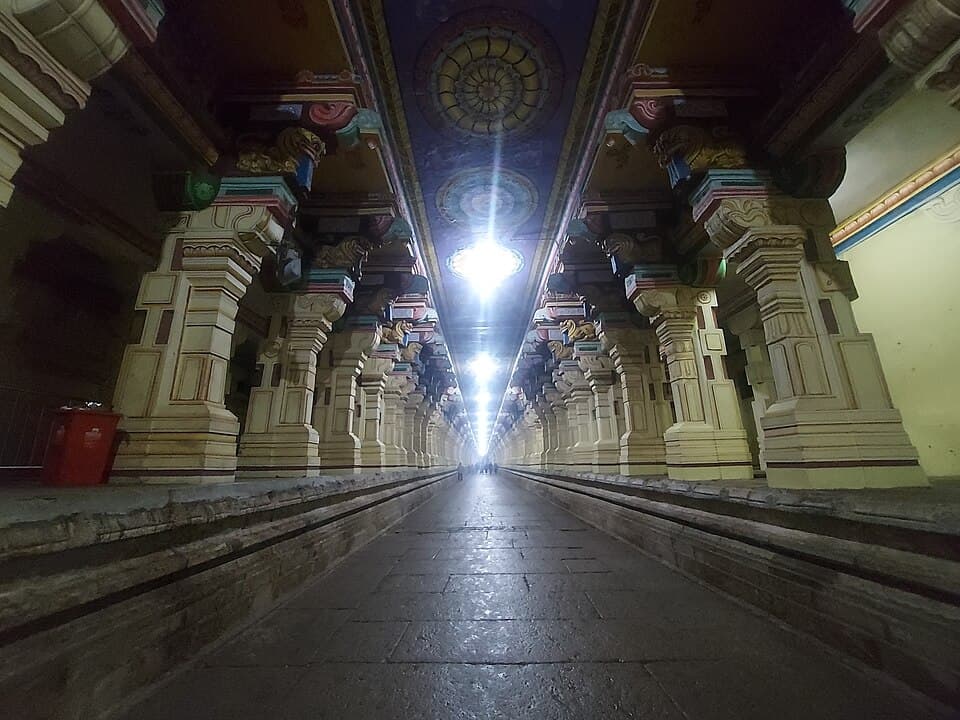
Ramanathaswamy Temple
Rameswaram, Tamil Nadu
Madurai Nayaks12th - 17th Century CE
One of the twelve Jyotirlinga temples and a Char Dham site, located on Pamban Island. Legend says the Shiva lingam here was established by Rama himself before his battle with Ravana. The temple has the longest corridor of any Hindu temple in India, extending over 1200 meters with ornately carved pillars.
S
Shiva (Ramanathaswamy)K
UNESCO
Kailasanatha Temple (Ellora Cave 16)
Ellora, Maharashtra
Rashtrakuta8th Century CE
The most extraordinary rock-cut temple in the world, carved top-down from a single basalt cliff by order of Rashtrakuta king Krishna I. An estimated 200,000 tons of rock were removed to create this monolithic representation of Mount Kailasa, Shiva's abode. It is twice the area of the Parthenon in Athens.
S
Shiva (Kailasanatha)A
UNESCO
Ajanta Caves
Ajanta (near Aurangabad), Maharashtra
Vakataka2nd Century BCE - 5th Century CE
A complex of 30 rock-cut Buddhist cave monuments dating from the 2nd century BCE to about 480 CE. The later caves, patronized by the Vakataka dynasty, contain the finest surviving examples of ancient Indian painting, depicting the Jataka tales and the life of the Buddha in vivid mineral colors.
B
Buddha (Buddhist monastery complex)E
UNESCO
Elephanta Caves
Elephanta Island (Gharapuri), Maharashtra
Kalachuri6th - 7th Century CE
Located on an island in Mumbai Harbour, the Elephanta Caves contain a spectacular network of rock-cut temples dedicated to Shiva. The main attraction is the 6-meter-tall Trimurti (three-headed Shiva) sculpture showing Shiva as creator, preserver, and destroyer -- widely regarded as one of the finest sculptures in India.
S
Shiva (Maheshmurti / Trimurti)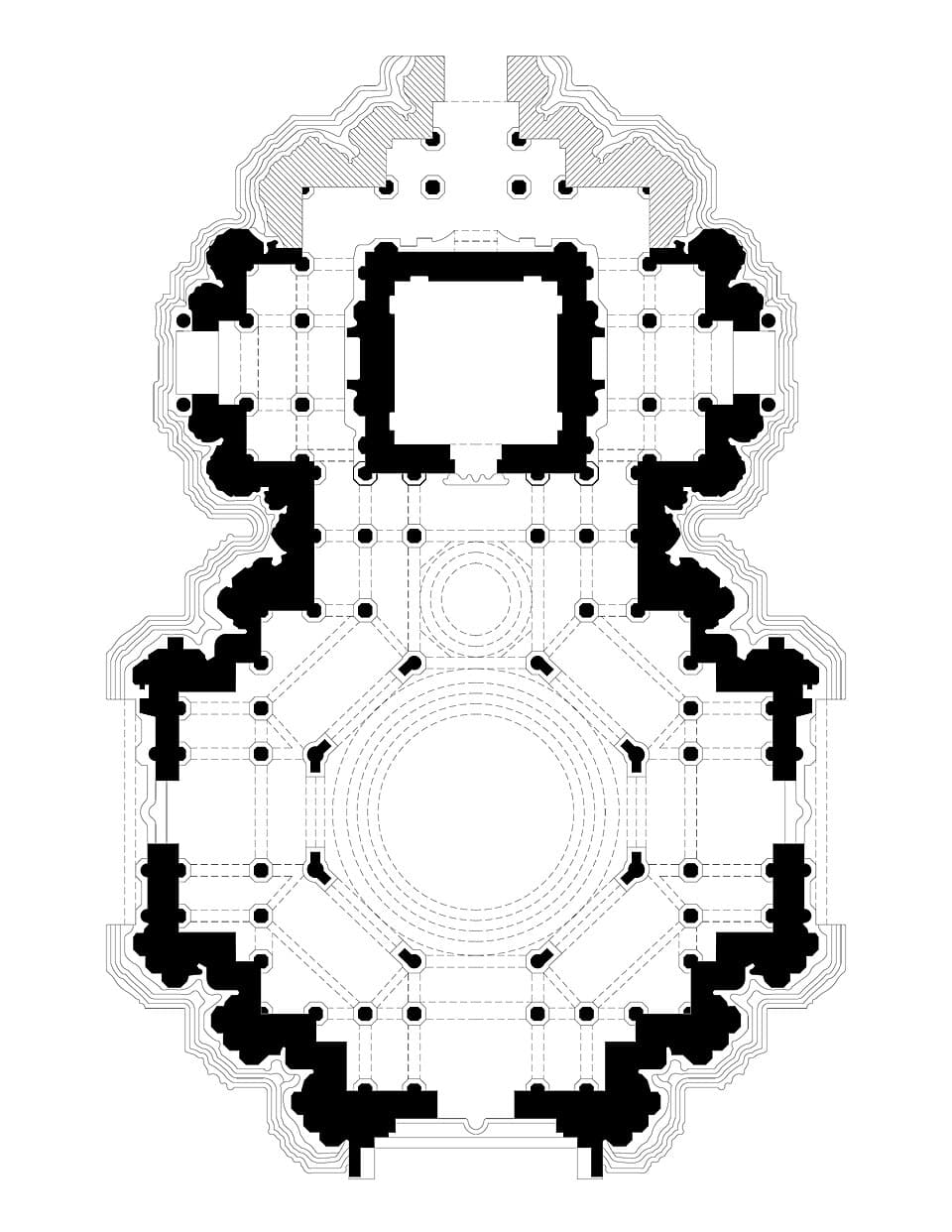
Somnath Temple
Somnath (Veraval), Gujarat
Misc Historic1st Century CE (original); rebuilt 1951
One of the twelve Jyotirlinga temples, Somnath has been destroyed and rebuilt multiple times throughout history -- most famously sacked by Mahmud of Ghazni in 1024 CE. The current temple was rebuilt after Indian independence in 1951 at the initiative of Sardar Vallabhbhai Patel, in the Chalukya style of Maru-Gurjara architecture.
S
Shiva (Somnath - Lord of the Moon)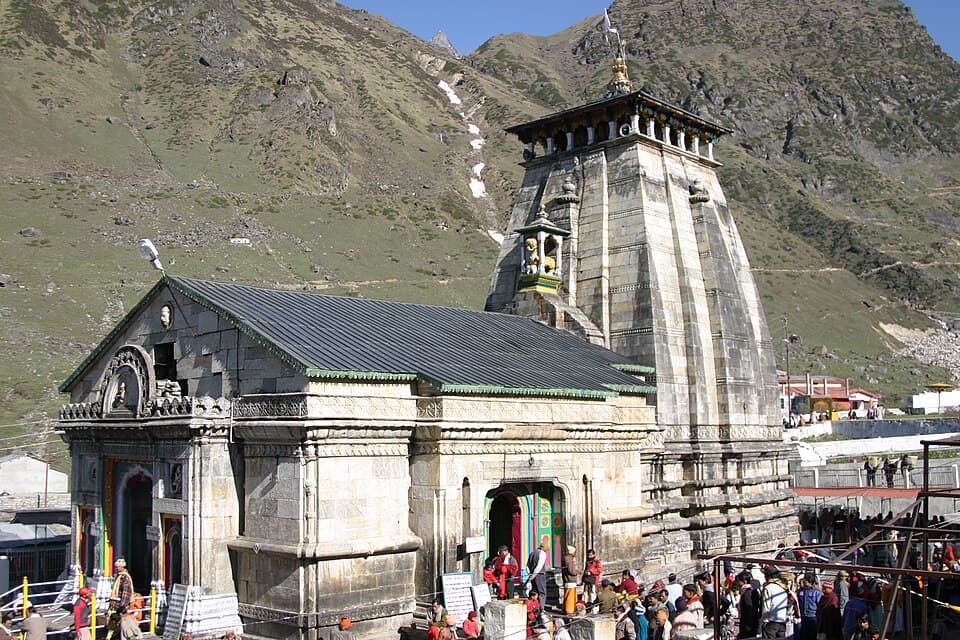
Kedarnath Temple
Kedarnath, Uttarakhand
Misc Historic8th Century CE (attributed to Adi Shankaracharya)
One of the twelve Jyotirlingas and the highest among them, located at 3,583 meters in the Garhwal Himalayas near the Mandakini river. The present temple is attributed to Adi Shankaracharya (8th century CE) though the site has been sacred since the Mahabharata era. It survived the devastating 2013 Uttarakhand floods when a large boulder diverted the floodwaters around it.
S
Shiva (Kedareshwar)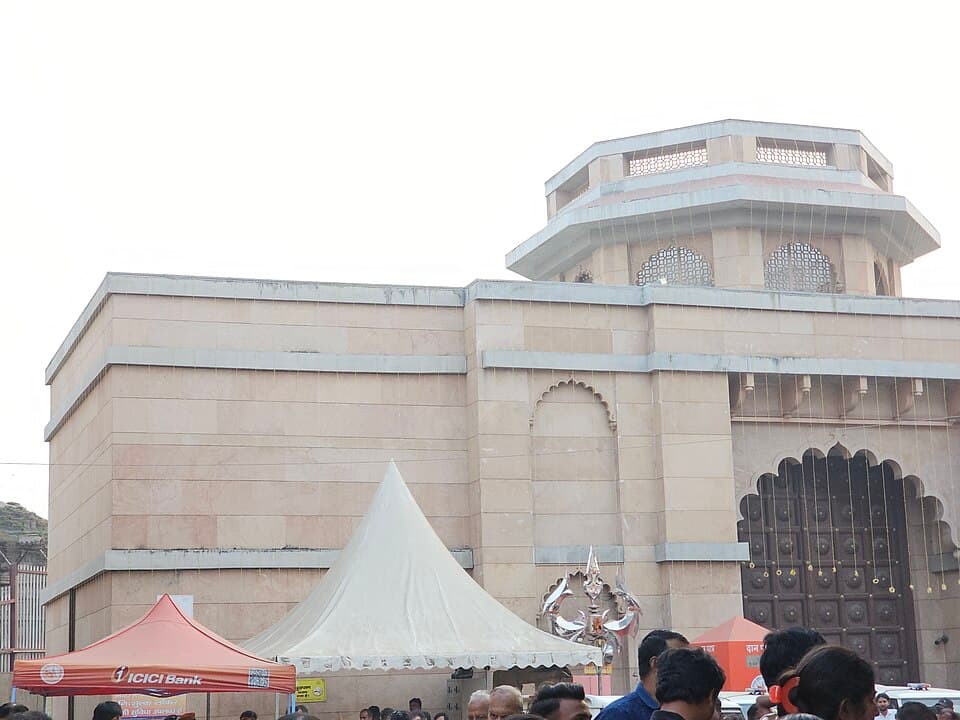
Kashi Vishwanath Temple
Varanasi, Uttar Pradesh
Misc Historic18th Century CE (current structure)
One of the most famous Hindu temples, dedicated to Shiva as Vishwanath (Lord of the Universe). The current structure was built in 1780 by Ahilyabai Holkar of Indore. The gold plating on the tower was donated by Maharaja Ranjit Singh of Punjab in 1839. The temple sits on the western bank of the Ganga in the ancient city of Varanasi.
S
Shiva (Vishwanath - Lord of the Universe)D
Dilwara Temples
Mount Abu, Rajasthan
Solanki11th - 13th Century CE
A complex of five Jain temples built between the 11th and 13th centuries, renowned for their extraordinarily intricate marble carvings. The Vimal Vasahi (1031 CE) and Luna Vasahi (1230 CE) temples are considered among the finest examples of marble carving in the world, with ceiling medallions of such delicacy that they appear translucent.
J
Jain Tirthankaras (Adinatha, Neminatha, others)R
Ranakpur Jain Temple
Ranakpur, Rajasthan
Misc Historic15th Century CE
One of the largest and most important Jain temples in India, built by the merchant Dharna Shah under the patronage of Rana Kumbha of Mewar. The Chaumukha (four-faced) temple is dedicated to Adinatha and contains an astounding 1444 intricately carved marble pillars, no two of which are alike.
J
Jain Tirthankara Adinatha (Rishabhanatha)S
UNESCO
Sanchi Stupa
Sanchi, Madhya Pradesh
Misc Historic3rd Century BCE - 1st Century CE
The Great Stupa at Sanchi is the oldest stone structure in India, originally commissioned by Emperor Ashoka in the 3rd century BCE. The four ornamental gateways (toranas) added in the 1st century CE contain some of the finest examples of early Buddhist sculpture, narrating Jataka tales and events from the Buddha's life without depicting him in human form.
B
Buddha (relics)M
UNESCO
Mahabodhi Temple
Bodh Gaya, Bihar
Misc Historic3rd Century BCE (original); 5th - 6th Century CE (current)
The most sacred site in Buddhism, marking the spot where Siddhartha Gautama attained enlightenment under the Bodhi Tree. The current temple dates to the 5th-6th century CE and features a distinctive 55-meter pyramidal spire. A descendant of the original Bodhi Tree still stands beside the temple.
B
Buddha (site of enlightenment)M
Martand Sun Temple
Anantnag, Jammu & Kashmir
Misc Historic8th Century CE
The grandest Sun temple ever built in Kashmir, commissioned by Lalitaditya Muktapida of the Karkota dynasty. Now in ruins, it sits on a high plateau overlooking the Kashmir Valley. The architecture shows a unique blend of Gandhara, Gupta, and local Kashmiri styles with Greek and Roman influences visible in the classical columns and pediments.
S
Surya (Sun God)P
Padmanabhaswamy Temple
Thiruvananthapuram, Kerala
Misc Historic16th Century CE (current structure)
One of the 108 Divya Desams (holy Vaishnava shrines), famous for its main deity showing Vishnu reclining on the serpent Ananta. In 2011, vaults beneath the temple were found to contain treasures worth over $20 billion, making it the richest temple -- and possibly the richest institution -- in the world.
V
Vishnu (Padmanabha - reclining on Ananta Shesha)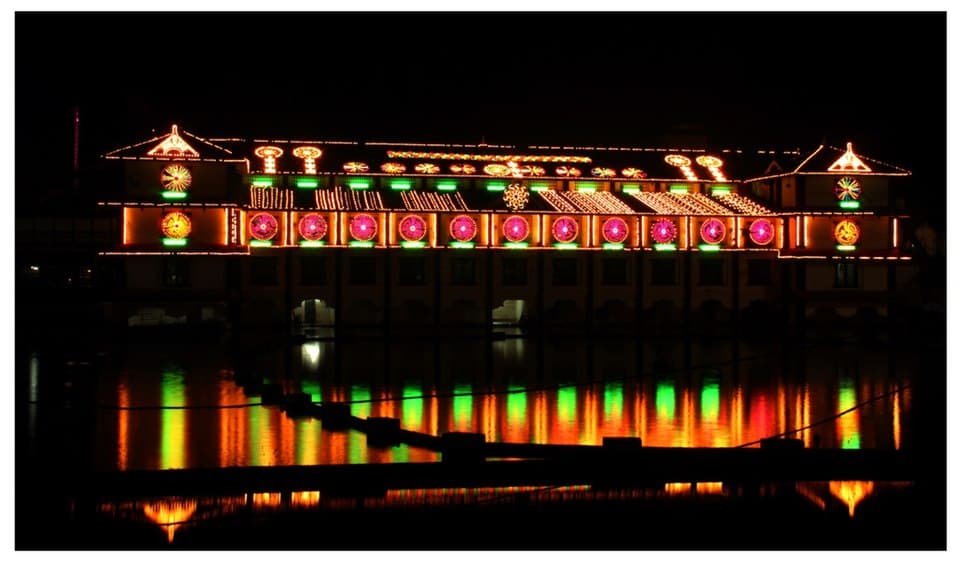
Guruvayur Temple
Guruvayur, Kerala
Misc Historic16th Century CE (current structure; much older origin)
One of the most important Krishna temples in India, known as "Bhuloka Vaikunta" (Heaven on Earth). The idol represents Vishnu with four arms holding the conch, discus, mace, and lotus. The temple follows the traditional Kerala architectural style with a copper-clad circular sanctum and is one of the few temples that maintains ancient Tantric worship rituals.
V
Vishnu (Krishna as a child, Guruvayurappan)B
UNESCO
Brihadisvara Temple (Gangaikonda)
Gangaikonda Cholapuram, Tamil Nadu
Chola11th Century CE
While sharing the same name as the Thanjavur temple, this Brihadisvara at Gangaikonda Cholapuram was conceived by Rajendra Chola I as a rival to his father's creation. The vimana, though slightly shorter, is considered more elegant with its curved profile. The temple houses remarkable Chola bronze sculptures and stone carvings.
S
ShivaD
UNESCO
Devi Jagadambi Temple
Khajuraho, Madhya Pradesh
Chandela11th Century CE
Originally dedicated to Vishnu, this temple was later rededicated to Parvati (as Jagadambi, Mother of the World). It stands next to the Kandariya Mahadeva and is notable for its well-proportioned sikhara and exceptionally beautiful sculptures of celestial maidens (surasundaris) on its exterior walls.
P
Parvati (originally Vishnu)R
Rudra Mahalaya Temple
Siddhpur, Gujarat
Solanki12th Century CE
Once one of the grandest temples of the Solanki period, the Rudra Mahalaya was built by Siddharaja Jayasimha. Though largely destroyed by Alauddin Khalji's forces in 1296-97 CE, the surviving torana arches, pillars, and sculptural fragments reveal the astonishing scale and artistry of the original structure.
S
Shiva (Rudra)R
Rajarani Temple
Bhubaneswar, Odisha
Eastern Ganga11th Century CE
Known as the "Love Temple" of Bhubaneswar for its exquisite sculptures of amorous couples, nymphs, and directional guardians (dikpalas). The temple takes its name from the local "rajarani" sandstone used in construction. Uniquely, no deity is currently installed, and the temple's original dedication remains debated.
N
None (no deity currently installed)T
Thanjavur Maratha Palace & Temple Complex
Thanjavur, Tamil Nadu
Madurai Nayaks16th - 18th Century CE
The Thanjavur Royal Palace complex, expanded by the Nayak and Maratha rulers, includes several temples and the famous Saraswati Mahal Library. The complex showcases the later evolution of Dravidian temple architecture under Nayak and Maratha patronage, with ornate pillared halls and painted ceilings.
V
Various (Shiva, Vishnu)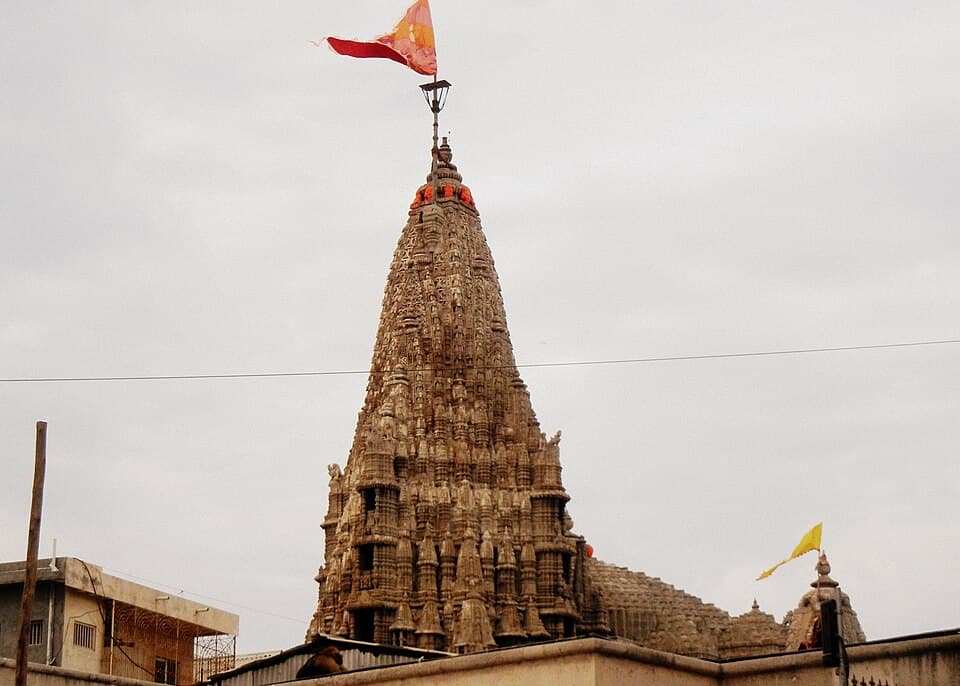
Dwarkadhish Temple
Dwarka, Gujarat
Rajput15th-16th Century CE
The main temple of Dwarka, one of the four sacred Char Dham pilgrimage sites. The five-storey temple stands on 60 pillars and is believed to be over 2,500 years old in origin.
K
Krishna (Dwarkadhish)A
Akshardham Gandhinagar
Gandhinagar, Gujarat
Modern India21st Century
Built in pink sandstone and white marble, this BAPS Swaminarayan temple complex took 13 years to build with 6,000 tonnes of carved stone assembled without steel or concrete.
S
SwaminarayanA
Ambaji Temple
Ambaji, Gujarat
RajputAncient (rebuilt 18th Century)
One of the 51 Shakti Peethas, where the heart of Goddess Sati is believed to have fallen. The temple houses no idol but a sacred Shree Visa Yantra.
A
Amba Mata (Shakti Peetha)P
Palitana Jain Temples
Palitana, Gujarat
Jain11th - 16th Century CE
A complex of 863 marble Jain temples on Shatrunjaya Hill, considered the most sacred pilgrimage place (Tirth) in Jainism. One must climb 3,572 steps to reach the summit.
A
Adinath (Rishabhanatha)A
Adalaj ni Vav
Adalaj, Gujarat
Rajput15th Century CE
A stunning five-storey stepwell combining Hindu, Islamic, and Jain architectural styles. Built by Queen Rudabai of the Vaghela dynasty, completed under Sultan Mahmud Begada.
N
None (Secular)H
Hutheesing Jain Temple
Ahmedabad, Gujarat
Jain19th Century CE
The best-known Jain temple in Ahmedabad, built during a famine to provide employment. Features exquisite white marble carvings and 52 miniature shrines.
D
Dharmanath (15th Tirthankara)G
Girnar Temples Complex
Junagadh, Gujarat
Jain12th Century CE
A group of Jain and Hindu temples atop Girnar Hill, reached by climbing 10,000 steps. The Neminath Jain temple at the summit is a major pilgrimage site.
N
Neminath (22nd Tirthankara)B
Bet Dwarka Temple
Bet Dwarka, Gujarat
Rajput15th Century CE
Located on Bet Dwarka island in the Gulf of Kutch, believed to be the original residence of Lord Krishna. Accessible only by boat from Okha port.
K
KrishnaS
Shamlaji Temple
Shamlaji, Gujarat
Solanki11th Century CE
An ancient temple on the banks of the Meshwo river, known for its beautiful Solanki-era carvings. The deity is also known as Gadadhar (Vishnu with a mace).
V
Vishnu (Gadadhar)T
Taranga Jain Temple
Taranga, Gujarat
Solanki12th Century CE
Built by Kumarapala of the Solanki dynasty, this hilltop Jain temple is considered one of the finest examples of Solanki architecture with extraordinary stone carvings.
A
Ajitnath (2nd Tirthankara)B
Bhadreshwar Jain Temple
Bhadreshwar, Gujarat
Jain5th Century CE (rebuilt)
One of the oldest Jain temples in India, dating back to 449 CE. Destroyed in the 2001 earthquake and meticulously reconstructed using traditional methods.
M
Mahavir SwamiR
Rukmini Devi Temple
Dwarka, Gujarat
Rajput12th Century CE
Located 2 km from the main Dwarkadhish temple, dedicated to Krishna\
R
Rukmini (Krishna's consort)N
Nageshwar Jyotirlinga
Dwarka, Gujarat
Modern IndiaAncient (rebuilt modern)
One of the 12 Jyotirlingas, located between Dwarka and Bet Dwarka. Known for the massive 25m tall statue of Lord Shiva in meditation posture.
S
Shiva (Jyotirlinga)K
Koteshwar Mahadev Temple
Koteshwar, Gujarat
RajputAncient
The last temple on the western tip of India before Pakistan border, at the mouth of Kori Creek. Believed to be where Shiva dropped his part of the body (kot/fortress).
S
ShivaB
Bahucharaji Temple
Bahucharaji, Gujarat
Rajput19th Century CE (ancient origin)
One of the 51 Shakti Peethas dedicated to Bahuchara Mata, a form of the Mother Goddess. The temple is particularly sacred to the transgender community.
B
Bahuchara MataK
Kalika Mata Temple
Champaner-Pavagadh, Gujarat
Rajput10th-11th Century CE
Atop Pavagadh Hill in the Champaner-Pavagadh Archaeological Park (UNESCO). One of the Shakti Peethas where the toes of Sati\
K
Kalika Mata (Shakti Peetha)S
Swaminarayan Mandir Ahmedabad
Ahmedabad, Gujarat
Modern India19th Century CE
The first Swaminarayan temple, built in 1822 under the direct guidance of Swaminarayan himself. Features exquisite Burma teak carvings and is the headquarters of the Swaminarayan Sampraday.
S
SwaminarayanV
Vadtal Swaminarayan Temple
Vadtal, Gujarat
Modern India19th Century CE
One of the two headquarters of the Swaminarayan Sampraday, built in 1824. Houses the murti of Lakshmi Narayan installed by Swaminarayan himself.
S
SwaminarayanH
Hatkeshwar Temple
Vadnagar, Gujarat
Solanki12th Century CE
Ancient temple in Vadnagar (hometown of PM Modi), featuring a beautifully carved torana arch and Solanki-era architectural details.
S
Shiva (Hatkeshwar)R
Ranchhodrai Temple Dakor
Dakor, Gujarat
Modern India17th Century CE
One of Gujarat\
K
Krishna (Ranchhodrai)C
Chamunda Mata Temple
Chotila, Gujarat
RajputAncient
A hilltop temple dedicated to Chamunda Mata, requiring a climb of 625 steps. Visible from the Ahmedabad-Rajkot highway, it is a major pilgrimage during Navaratri.
C
Chamunda MataS
Swami Narayan Temple Saputara
Saputara, Gujarat
Modern India20th Century
Hill station temple complex in the Dangs district, serving the tribal communities. Set amidst the Sahyadri mountains at 1,000m elevation.
V
VariousM
Mahabat Maqbara
Junagadh, Gujarat
Modern India19th Century CE
While a mausoleum rather than temple, this stunning Indo-Gothic-Islamic monument with its silver-painted doors and intricately carved arches is a major Junagadh landmark.
M
Mausoleum (Indo-Islamic)J
Jalaram Temple
Virpur, Gujarat
Modern India19th Century CE
Temple dedicated to the saint Jalaram Bapa, known for feeding the poor. The temple continues the tradition with free meals (prasad) served to all visitors.
J
Jalaram BapaS
Sahastralinga Talav
Patan, Gujarat
Solanki11th Century CE
An ancient lake with 1,000 Shiva lingams, built by Siddharaj Jaysinh. Though many lingams are now lost, the remaining ones and the tank itself are historically significant.
S
ShivaB
Bhavnath Mahadev Temple
Junagadh, Gujarat
RajputAncient
Ancient Shiva temple at the foot of Mount Girnar, famous for the Maha Shivaratri fair that attracts Naga Sadhus from across India.
S
ShivaD
Dholavira Archaeological Site
Dholavira, Gujarat
Misc Historic3rd Millennium BCE
One of the largest and most prominent Indus Valley Civilization sites, featuring sophisticated water conservation systems and a unique signboard with Indus script.
H
Harappan CivilizationL
Lothal Archaeological Site
Lothal, Gujarat
Misc Historic3rd Millennium BCE
Ancient Indus Valley port city with the world\
H
Harappan CivilizationK
Kirti Mandir
Porbandar, Gujarat
Modern India20th Century
Memorial temple at the birthplace of Mahatma Gandhi in Porbandar, preserving the house where he was born and a prayer hall.
M
Memorial (Mahatma Gandhi)S
Sidi Saiyyed Jali
Ahmedabad, Gujarat
Rajput16th Century CE
Famous for its exquisite stone jali (lattice screen) windows depicting intertwining trees. The Tree of Life jali is the symbol of Ahmedabad and IIM Ahmedabad\
I
Islamic (Jali artwork)R
Ram Mandir Ayodhya
Ayodhya, Uttar Pradesh
Modern India21st Century CE
The newly constructed grand temple at Ram Janmabhoomi, believed to be the birthplace of Lord Ram. Built in Nagara style with Rajasthani sandstone, consecrated on January 22, 2024.
L
Lord RamK
Krishna Janmabhoomi
Mathura, Uttar Pradesh
Modern IndiaAncient (rebuilt)
Temple complex at the believed birthplace of Lord Krishna, adjacent to the Shahi Idgah mosque. One of the most important Krishna pilgrimage sites.
K
KrishnaB
Banke Bihari Temple
Vrindavan, Uttar Pradesh
Modern India19th Century CE
One of the most revered temples in Vrindavan, famous for the unique curtain ceremony where the deity is revealed briefly at intervals.
K
Krishna (Banke Bihari)P
Prem Mandir
Vrindavan, Uttar Pradesh
Modern India21st Century CE
A magnificent modern temple built in white Italian marble, depicting scenes from Krishna\
R
Radha-Krishna and Sita-Ram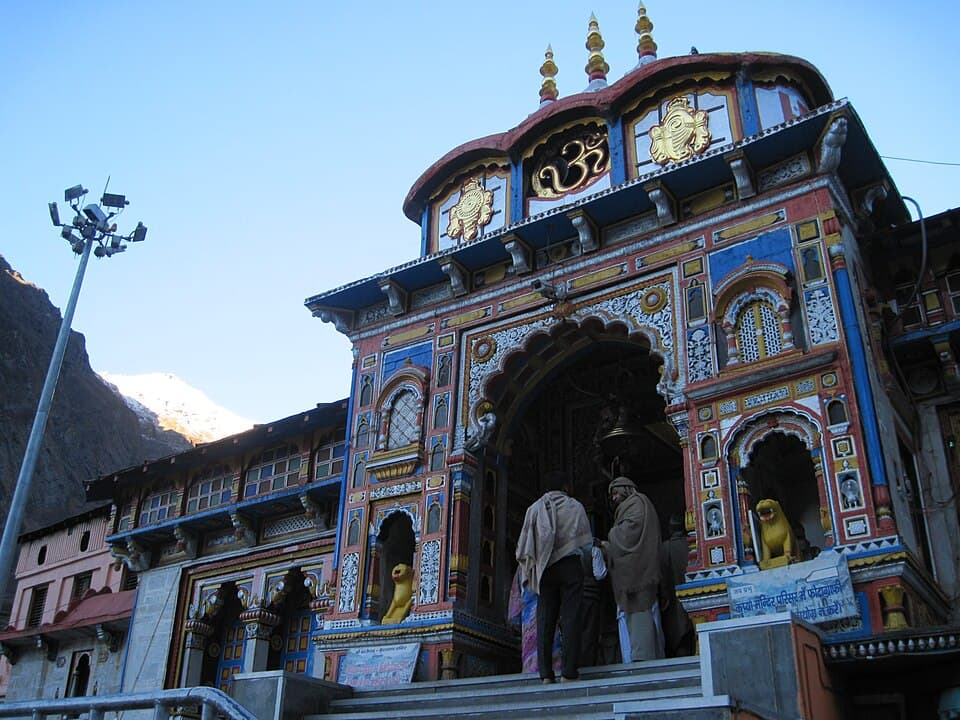
Badrinath Temple
Badrinath, Uttarakhand
Modern IndiaAncient (rebuilt 9th Century CE)
One of the four Char Dham pilgrimage sites, situated at 3,133m in the Himalayas. One of the 108 Divya Desams of Vaishnavism.
V
Vishnu (Badrinarayan)G
Gangotri Temple
Gangotri, Uttarakhand
Modern India18th Century CE
Temple dedicated to Goddess Ganga near the origin of the Ganges river. One of the Char Dham, situated at 3,100m altitude.
G
Goddess GangaY
Yamunotri Temple
Yamunotri, Uttarakhand
Modern India19th Century CE
Dedicated to the Yamuna river goddess, part of Char Dham. Features hot springs and a glacial lake as the river\
G
Goddess YamunaD
Dilwara Temples
Mount Abu, Rajasthan
Jain11th-13th Century CE
A complex of five Jain temples renowned for extraordinary marble carvings described as the finest in the world. The ceiling work is unmatched in intricacy.
A
Adinath & NeminathB
Brahma Temple Pushkar
Pushkar, Rajasthan
Rajput14th Century CE
One of very few temples in the world dedicated to Lord Brahma the Creator. Located on the banks of the sacred Pushkar Lake.
B
Brahma (Creator)K
Karni Mata Temple
Deshnok, Rajasthan
Rajput15th Century CE
Known as the Rat Temple, home to over 25,000 holy rats (kabas) that are worshipped and fed. Spotting a white rat is considered extremely auspicious.
K
Karni MataE
Eklingji Temple
Udaipur, Rajasthan
Rajput8th Century CE
The ruling deity of the Mewar dynasty. A complex of 108 temples centered around a four-faced Shiva lingam carved from black marble.
S
Shiva (Eklingji)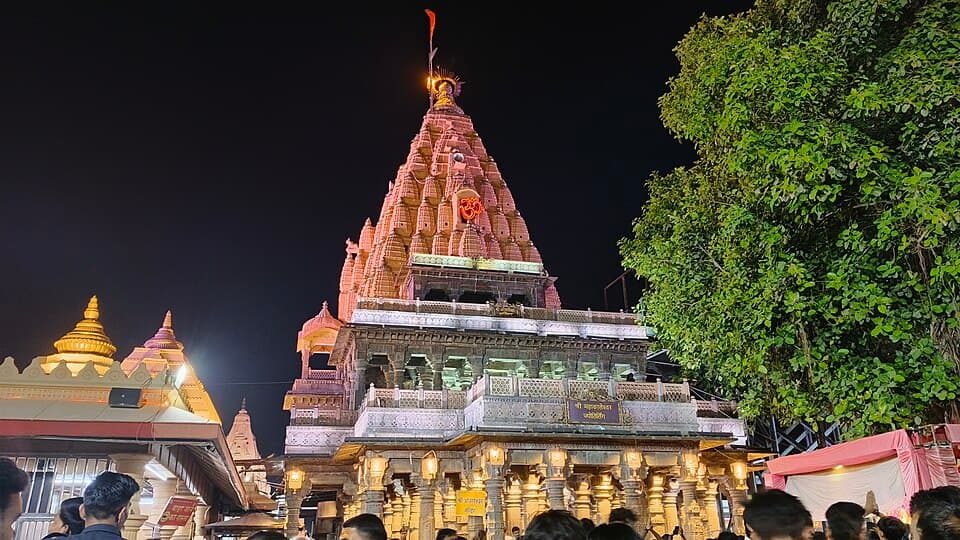
Mahakaleshwar Temple
Ujjain, Madhya Pradesh
MarathaAncient (current 18th Century)
One of 12 Jyotirlingas with a unique south-facing lingam. Known for the Bhasma Aarti performed with sacred ash from funeral pyres at dawn.
S
Shiva (Jyotirlinga)O
Omkareshwar Temple
Omkareshwar, Madhya Pradesh
MarathaAncient
One of 12 Jyotirlingas, located on an island shaped like the Om symbol in the Narmada river. Two temples — Omkareshwar and Mamleshwar — represent two Jyotirlingas.
S
Shiva (Jyotirlinga)H
Hadimba Temple
Manali, Himachal Pradesh
Rajput16th Century CE
A unique pagoda-style temple in a cedar forest, built in 1553 by Maharaja Bahadur Singh. Dedicated to Hadimba, wife of Bhima from the Mahabharata.
H
Hadimba DeviJ
Jwala Ji Temple
Kangra, Himachal Pradesh
RajputAncient
A Shakti Peetha where an eternal flame burns naturally from fissures in the rock. No idol is worshipped — the flame itself is the deity.
J
Jwala (Shakti Peetha)V
Vaishno Devi Temple
Katra, Jammu & Kashmir
Modern IndiaAncient
One of the most visited shrines in India (8 million+ visitors/year), located in a cave at 5,200 feet. Three natural rock formations (pindis) represent the three goddesses.
V
Vaishno Devi (Shakti Peetha)A
Amarnath Cave Temple
Pahalgam, Jammu & Kashmir
Modern IndiaAncient
A natural cave at 3,888m containing an ice stalagmite that waxes and wanes with the moon, worshipped as a Shiva lingam. Pilgrimage (Yatra) is open for ~45 days annually.
S
Shiva (Ice Lingam)A
Akshardham Delhi
New Delhi, Delhi
Modern India21st Century CE
Guinness World Record holder for the largest comprehensive Hindu temple. Built with 6,000 tonnes of Rajasthani sandstone, without steel, in just 5 years.
S
SwaminarayanL
Lotus Temple
New Delhi, Delhi
Modern India20th Century CE
A Bahá\
B
Bahai (all religions)L
Lakshmi Narayan Temple (Birla Mandir)
New Delhi, Delhi
Modern India20th Century CE
Built by the Birla family and inaugurated by Mahatma Gandhi on the condition that people of all castes would be allowed entry.
L
Lakshmi-Narayan (Vishnu)M
Mansa Devi Temple
Panchkula, Haryana
Modern IndiaAncient
A Shakti Peetha on the Shivalik hills near Chandigarh, known for wish-fulfilling threads tied to the sacred tree. Accessible by ropeway.
M
Mansa Devi (Shakti Peetha)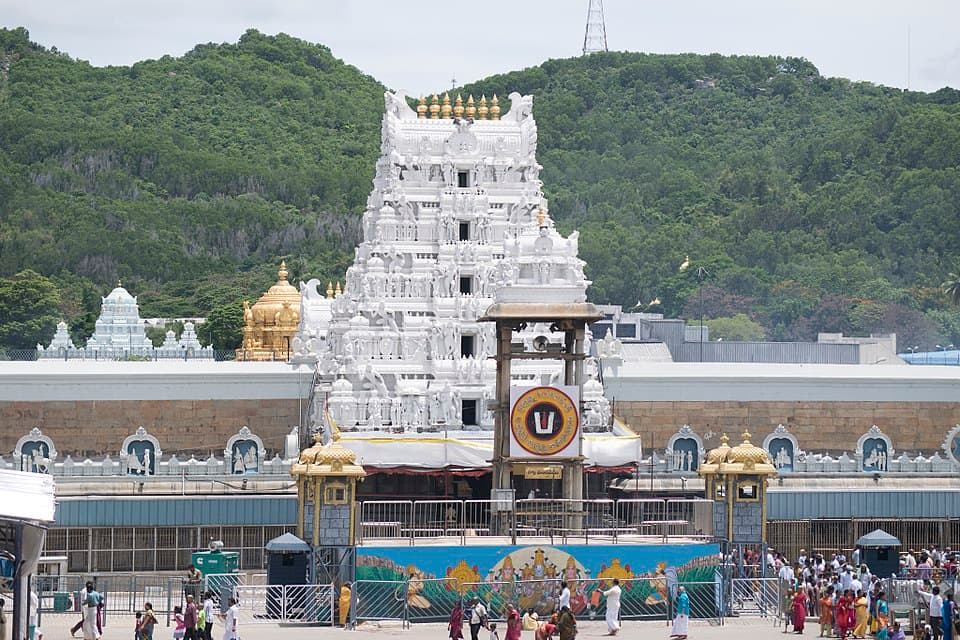
Tirumala Venkateswara Temple
Tirupati, Andhra Pradesh
Chola10th Century CE
The richest temple in the world with annual donations exceeding $1 billion. Located atop seven hills (Tirumala), visited by 50,000-100,000 pilgrims daily.
V
Venkateswara (Vishnu)S
Sabarimala Temple
Pathanamthitta, Kerala
CheraAncient
Hilltop temple receiving 45-50 million pilgrims annually during the Mandalam-Makaravilakku season. Pilgrims observe 41 days of austerity before visiting.
A
AyyappanM
Murudeshwar Temple
Murudeshwar, Karnataka
Modern India21st Century CE
Home to the second tallest Shiva statue in the world (37m/123ft), set on a hillock surrounded by the Arabian Sea on three sides.
S
ShivaG
Gomateshwara (Bahubali)
Shravanabelagola, Karnataka
Jain10th Century CE
The world\
B
Bahubali (Jain)D
Dakshineswar Kali Temple
Kolkata, West Bengal
Pala19th Century CE
Temple where Sri Ramakrishna Paramahamsa served as priest and had his spiritual experiences. Features the Navaratna (nine-spired) architecture.
K
KaliK
Kalighat Temple
Kolkata, West Bengal
Pala19th Century CE (ancient origin)
One of the 51 Shakti Peethas where the toes of Sati\
K
Kali (Shakti Peetha)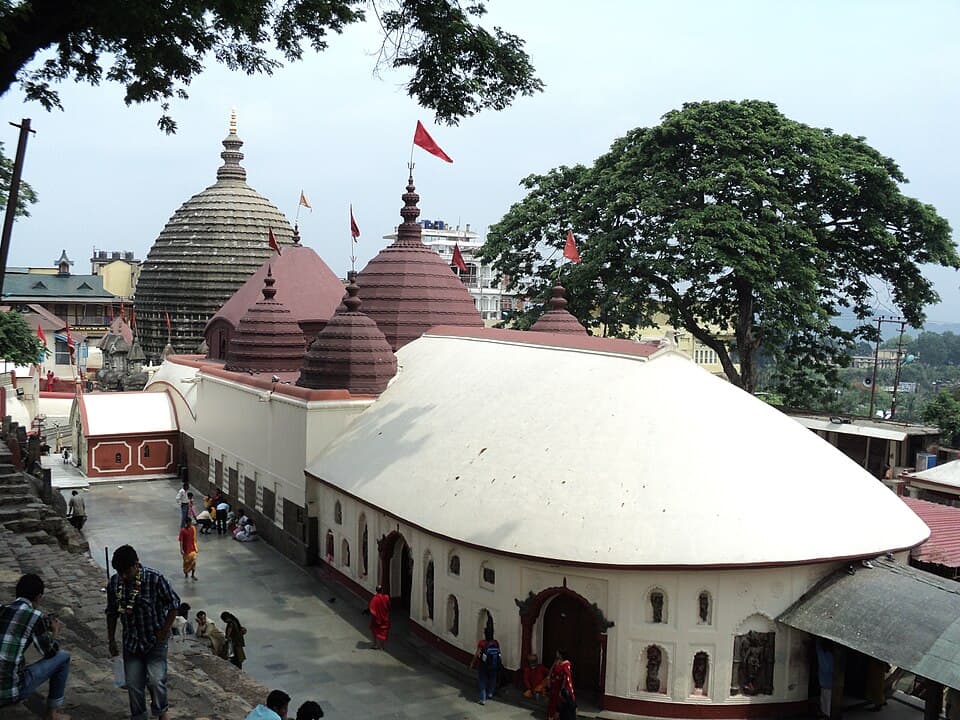
Kamakhya Temple
Guwahati, Assam
Ahom17th Century CE
The most important Shakti Peetha where Sati\
K
Kamakhya (Shakti Peetha)V
Vishnupad Temple
Gaya, Bihar
Maratha18th Century CE
Temple built over a footprint-shaped rock said to be Vishnu\
V
Vishnu (Footprint)M
Mangeshi Temple
Ponda, Goa
Maratha18th Century CE
The largest and most popular temple in Goa, featuring a unique blend of Hindu and Portuguese colonial architecture with a seven-storey lamp tower.
S
Shiva (Mangesh)S
Shirdi Sai Baba Temple
Shirdi, Maharashtra
Modern India20th Century CE
Temple dedicated to the 19th-century saint Sai Baba, receiving 25,000+ visitors daily. The marble murti was installed in 1954 in the Samadhi Mandir.
S
Sai Baba of ShirdiT
Trimbakeshwar Temple
Trimbak, Maharashtra
Maratha18th Century CE
One of 12 Jyotirlingas near the source of Godavari river. Unique for its three-faced lingam representing Brahma, Vishnu, and Shiva.
S
Shiva (Jyotirlinga)
Bhimashankar Temple
Pune, Maharashtra
Maratha18th Century CE
One of 12 Jyotirlingas in the Sahyadri mountains, surrounded by dense forests. The temple architecture is a blend of Nagara and Hemadpanthi styles.
S
Shiva (Jyotirlinga)G
Grishneshwar Temple
Ellora, Maharashtra
Maratha18th Century CE
The last of the 12 Jyotirlingas, located near the Ellora Caves. Rebuilt by Ahilyabai Holkar with red stone and five-tiered shikhara.
S
Shiva (Jyotirlinga)V
Vitthal Temple Pandharpur
Pandharpur, Maharashtra
Maratha13th Century CE
The most important Varkari pilgrimage center, where millions walk for weeks in the annual Pandharpur Wari. Standing form of Vishnu on a brick.
V
Vithoba (Vishnu/Krishna)S
Siddhivinayak Temple
Mumbai, Maharashtra
Modern India19th Century CE
The most visited temple in Mumbai, known for wish-fulfillment. The unique murti has the trunk turning to the right (usually left), considered very powerful.
G
Ganesha (Siddhivinayak)M
Morgaon Ganpati (Ashtavinayak)
Morgaon, Maharashtra
Maratha14th Century CE
The first of the eight Ashtavinayak temples, where the pilgrimage circuit begins and ends. Known as Moreshwar — Ganesha who rides a peacock.
G
Ganesha (Moreshwar)B
Bhoramdeo Temple
Kawardha, Chhattisgarh
Rajput11th Century CE
Often called the Khajuraho of Chhattisgarh due to its erotic sculptures. A cluster of temples from the 7th-11th centuries in a picturesque valley.
S
ShivaB
Baidyanath Temple
Deoghar, Jharkhand
Modern IndiaAncient
One of 12 Jyotirlingas in the Vaidyanath temple complex containing 22 temples. Associated with the legend of Ravana carrying Shiva\
S
Shiva (Jyotirlinga)T
Tripura Sundari Temple
Udaipur, Tripura
Modern India15th Century CE
One of the 51 Shakti Peethas, housing a deity in the form of a Kali image on a tortoise. One of the most important temples in northeast India.
T
Tripura Sundari (Shakti Peetha)P
Pashupatinath Temple
Kathmandu, Bagmati
Modern India5th Century CE
The most sacred Hindu temple in Nepal and the oldest in Kathmandu. UNESCO World Heritage Site on the banks of the Bagmati river, famous for cremation ghats.
S
Shiva (Pashupati)P
Prambanan Temple
Yogyakarta, Central Java
Modern India9th Century CE
The largest Hindu temple complex in Indonesia and Southeast Asia. Featuring 240 temples, the central Shiva temple rises to 47m. UNESCO World Heritage Site.
S
Shiva, Vishnu, Brahma
Angkor Wat
Siem Reap, Siem Reap
Khmer12th Century CE
The largest religious monument in the world, originally a Hindu temple dedicated to Vishnu, later converted to Buddhism. Represents Mount Meru.
V
Vishnu / BuddhistT
Tanah Lot Temple
Tabanan, Bali
Modern India16th Century CE
An iconic sea temple perched on a rocky outcrop, accessible only at low tide. One of Bali\
D
Dewa Baruna (Sea God)S
Sri Ranganathaswamy Temple
Srirangam, Tamil Nadu
Chola10th Century CE (ancient origin)
The largest functioning Hindu temple complex in the world, spread over 156 acres with 7 concentric walls and 21 gopurams.
V
Vishnu (Ranganatha)M
Muktinath Temple
Mustang, Gandaki
Modern IndiaAncient
Located at 3,710m in the Himalayas, sacred to both Hindus and Buddhists. Features 108 water spouts and a natural gas-fed eternal flame near water.
V
Vishnu (Mukti Narayan)K
Kapaleeshwarar Temple
Chennai, Tamil Nadu
Chola7th Century CE (rebuilt 16th)
One of the most famous Shiva temples in Chennai with a stunning 37m gopuram. Originally a Pallava-era temple, rebuilt by the Vijayanagara kings.
S
ShivaA
Arunachaleswarar Temple
Thiruvannamalai, Tamil Nadu
Chola9th Century CE
One of the Pancha Bootha Sthalams representing fire. Sprawling 25-acre complex with massive gopurams. The Karthigai Deepam festival lights a giant lamp on the hill.
S
Shiva (Fire lingam)A
Andal Temple
Srivilliputhur, Tamil Nadu
Pandya9th Century CE
The 11-tier gopuram of this temple is the official emblem of the Tamil Nadu government. Dedicated to the poet-saint Andal.
A
Andal (Vishnu consort)K
Kumbakonam Temple Town
Kumbakonam, Tamil Nadu
Chola9th-12th Century CE
Known as the Temple Town with 188 temples. The Mahamaham tank festival occurs every 12 years drawing millions.
V
VariousE
Ekambareswarar Temple
Kanchipuram, Tamil Nadu
Pallava7th Century CE
One of the Pancha Bootha Sthalams representing earth. Has a 3,500-year-old mango tree said to grant fertility.
S
Shiva (Earth lingam)J
Jambukeswarar Temple
Thiruvanaikaval, Tamil Nadu
Chola2nd Century CE
One of the Pancha Bootha Sthalams representing water. The lingam is partially submerged in water that seeps from underground.
S
Shiva (Water lingam)K
Kailasanathar Temple Kanchi
Kanchipuram, Tamil Nadu
Pallava8th Century CE
Oldest structural temple in Kanchipuram built by Rajasimha Pallava. Features sandstone construction and stunning bas-reliefs.
S
ShivaV
Vaitheeswaran Temple
Vaitheeswaran Koil, Tamil Nadu
Chola7th Century CE
Temple associated with Mars (Mangala/Angaraka) in the Navagraha circuit. Famous for Nadi astrology readings.
S
Shiva (Healer)S
Suchindram Thanumalayan
Kanyakumari, Tamil Nadu
Pandya9th Century CE
Unique temple dedicated to the Hindu Trinity. The 18-foot Hanuman statue and musical pillars are famous attractions.
S
Sthanu-Mal-Ayan (Trimurti)M
Mahabalipuram Monuments
Mahabalipuram, Tamil Nadu
Pallava7th Century CE
UNESCO World Heritage group of monuments including the Shore Temple, Five Rathas, and Arjuna\
V
VariousK
Kumbeswarar Temple
Kumbakonam, Tamil Nadu
Chola9th Century CE
The largest Shiva temple in Kumbakonam. Associated with the Mahamaham festival held every 12 years.
S
ShivaT
Tiruchendur Murugan Temple
Tiruchendur, Tamil Nadu
Pandya7th Century CE
One of six Arupadai Veedu temples of Lord Murugan, situated on the Bay of Bengal coast. The sanctum is below sea level.
M
Murugan (Subrahmanya)P
Palani Murugan Temple
Palani, Tamil Nadu
PandyaAncient
One of the six Arupadai Veedu temples. The idol is made of Navapashanam, a special nine-herb compound by Sage Bogar.
M
Murugan (Dandayudhapani)T
Thiruthani Murugan Temple
Thiruthani, Tamil Nadu
Chola11th Century CE
One of six Arupadai Veedu. Perched on a hill with 365 steps — one for each day of the year.
M
Murugan (Valli Devasena sameta)S
Swamimalai Swaminatha Temple
Swamimalai, Tamil Nadu
Chola10th Century CE
One of six Arupadai Veedu where Murugan taught the meaning of Om to his father Shiva. Famous for bronze casting.
M
Murugan (Swaminatha)N
Nellaiappar Temple
Tirunelveli, Tamil Nadu
Pandya7th Century CE
Twin temples for Shiva and Parvati connected by a musical pillar mandapam. Known for its chain of stone links carved from a single stone.
S
Shiva & ParvatiC
Chamundeshwari Temple
Mysuru, Karnataka
Hoysala12th Century CE
Atop Chamundi Hill overlooking Mysuru, with the famous Nandi bull statue and Mahishasura statue midway.
C
Chamundeshwari (Durga)M
Manjunatha Temple
Dharmasthala, Karnataka
Modern India14th Century CE
Unique temple with a Jain administration (Heggade family) running a Shaiva Hindu temple. Feeds 10,000+ people free daily.
S
Shiva (Manjunatha)U
Udupi Sri Krishna Temple
Udupi, Karnataka
Modern India13th Century CE
Founded by Sri Madhvacharya. Famous for the Kanakana Kindi (window) through which Krishna was seen. Known for the Ashta Matha Paryaya system.
K
KrishnaK
Kukke Subrahmanya Temple
Subrahmanya, Karnataka
Modern IndiaAncient
Major Subrahmanya (snake deity) temple in the Western Ghats. Famous for Sarpa Dosha Nivarana Puja.
S
Subrahmanya (Murugan)S
Sringeri Sharada Peetham
Sringeri, Karnataka
Vijayanagara8th Century CE
One of four cardinal mathas established by Adi Shankaracharya. The Vidyashankara temple has 12 zodiac pillars aligned with the sun.
S
Sharada (Saraswati)A
Aihole Temple Complex
Aihole, Karnataka
Chalukya5th-12th Century CE
Called the "Cradle of Indian Architecture" with over 125 temples showcasing every style experimentation.
V
VariousN
Namdroling Monastery
Bylakuppe, Karnataka
Modern India20th Century CE
The largest Nyingmapa monastery in the world outside Tibet. Known as Golden Temple for its ornate golden Buddha statues.
B
Buddha / PadmasambhavaM
Mookambika Temple
Kollur, Karnataka
Modern IndiaAncient
A major Shakti temple on the slopes of Kodachadri hill in the Western Ghats. One of the seven Muktisthalas.
M
Mookambika (Parvati)M
Male Mahadeshwara Temple
MM Hills, Karnataka
Modern India15th Century CE
Hilltop temple in the Eastern Ghats at 3,000 feet, surrounded by forests. Major pilgrimage for Karnataka and Tamil Nadu.
S
Shiva (Mahadeshwara)S
Simhachalam Temple
Visakhapatnam, Andhra Pradesh
Eastern Ganga11th Century CE
Hilltop temple with a unique deity combining Varaha (boar) and Narasimha (lion-man) forms. The deity is covered in sandalwood paste year-round.
V
Vishnu (Varaha-Narasimha)M
Mallikarjuna Temple
Srisailam, Andhra Pradesh
Kakatiya2nd Century CE
Both a Jyotirlinga and Shakti Peetha — one of only two temples in India with both. Set in the Nallamala Hills.
S
Shiva (Jyotirlinga) & Bhramaramba (Shakti)Y
Yaganti Uma Maheswara
Yaganti, Andhra Pradesh
Kakatiya15th Century CE
Temple famous for a naturally growing Nandi statue that increases in size measurably over centuries.
S
Shiva (Uma Maheswara)T
Thousand Pillar Temple
Warangal, Telangana
Kakatiya12th Century CE
Star-shaped Kakatiya temple with exactly 1,000 intricately carved pillars and three shrines for the Trimurti.
S
Shiva, Vishnu, SuryaR
Ramappa Temple
Palampet, Telangana
Kakatiya13th Century CE
UNESCO World Heritage Site known for floating bricks so light they don\
S
Shiva (Ramalingeswara)B
Bhadrachalam Temple
Bhadrachalam, Telangana
Kakatiya17th Century CE
Temple on the banks of Godavari river, built by Bhakta Ramadasu who was imprisoned for using state funds for construction.
R
Rama (Vaikuntham)S
Srikalahasteeswara
Srikalahasti, Andhra Pradesh
Pallava5th Century CE
One of the Pancha Bootha Sthalams representing wind. The lamp inside the sanctum flickers without any air current, proving the wind element.
S
Shiva (Vayu Lingam)A
Ahobilam Temple
Ahobilam, Andhra Pradesh
Vijayanagara10th Century CE
Complex of nine temples dedicated to nine forms of Narasimha, set in the Nallamala Hills. Both Upper and Lower Ahobilam.
N
Narasimha (9 forms)A
Annavaram Satyanarayana
Annavaram, Andhra Pradesh
Modern India17th Century CE
Second richest temple in Andhra Pradesh after Tirupati. Known for Satyanarayana Vratam puja performed by thousands daily.
S
Satyanarayana (Vishnu)K
Kalijai Temple
Chilika Lake, Odisha
Modern IndiaAncient
Island temple in Chilika Lake, Asia\
K
Kalijai (Local Goddess)U
Udayagiri & Khandagiri Caves
Bhubaneswar, Odisha
Misc Historic2nd Century BCE
Ancient Jain rock-cut cave monasteries with the famous Hathi Gumpha (Elephant Cave) inscription of King Kharavela.
J
Jain TirthankarasS
Samaleswari Temple
Sambalpur, Odisha
Modern India16th Century CE
Presiding deity of Sambalpur on the banks of Mahanadi river. The city is named after this goddess.
S
Samaleswari (Shakti)C
Cuttack Chandi Temple
Cuttack, Odisha
Modern IndiaAncient
The presiding deity of Cuttack, one of the oldest living cities in India. Major center of Durga Puja celebrations.
C
Chandi (Durga)T
Tara Tarini Temple
Berhampur, Odisha
Modern IndiaAncient
Hilltop Shakti Peetha on the banks of Rushikulya river. One of four Adi Shakti Peethas, predating the 51 Shakti Peethas.
T
Tara Tarini (Shakti)K
Khajuraho Temple Complex
Khajuraho, Madhya Pradesh
Chandela10th-11th Century CE
UNESCO World Heritage Site with 25 surviving temples (of original 85) famous for erotic sculptures. Western group is most famous.
V
VariousO
Orchha Temple Complex
Orchha, Madhya Pradesh
Chandela16th-17th Century CE
Medieval town with the unique Ram Raja Temple — the only temple where Ram is worshipped as a king, with guards presenting arms.
R
Ram & ChaturbhujU
Ujjain Temple Town
Ujjain, Madhya Pradesh
MarathaAncient
One of seven sacred cities (Sapta Puri) and one of four Kumbh Mela sites. Home to Mahakaleshwar Jyotirlinga.
V
VariousO
Osian Temple Complex
Osian, Rajasthan
Rajput8th-11th Century CE
Cluster of 18 Hindu and Jain temples in the Thar Desert, known as the Khajuraho of Rajasthan.
S
Sachiya Mata, MahaviraC
Chittorgarh Fort Temples
Chittorgarh, Rajasthan
Rajput8th-15th Century CE
Within the massive Chittorgarh Fort — Kirti Stambh (Tower of Fame, Jain) and Vijay Stambh (Tower of Victory, Hindu).
V
VariousN
Nathdwara Shrinathji
Nathdwara, Rajasthan
Rajput17th Century CE
Important Vaishnavite temple housing the Shrinathji idol moved from Mathura during Aurangzeb\
K
Krishna (Shrinathji)B
Bhojeshwar Temple
Bhojpur, Madhya Pradesh
Misc Historic11th Century CE
Incomplete temple with one of the tallest Shiva lingams in India at 7.5 feet. The construction plans are etched on nearby rocks.
S
Shiva (Massive Lingam)T
Teli ka Mandir
Gwalior, Madhya Pradesh
Misc Historic8th Century CE
Tallest structure in Gwalior Fort at 30m, uniquely blending Dravidian and Nagara styles. The rectangular shrine is topped by a vault-like roof.
V
VishnuC
Chottanikkara Bhagavathy
Chottanikkara, Kerala
Chera9th Century CE
Famous temple where the goddess appears as Saraswati in the morning, Lakshmi at noon, and Durga in the evening.
B
Bhagavathy (Parvati)E
Ettumanoor Mahadeva
Ettumanoor, Kerala
Chera10th Century CE
Famous for the Ezhara Ponnana (seven-and-a-half golden elephants) festival and stunning wall murals.
S
ShivaV
Vaikom Mahadeva
Vaikom, Kerala
Chera10th Century CE
Temple that was the site of the Vaikom Satyagraha (1924-25) — a landmark struggle for lower castes\
S
ShivaT
Thirunelli Temple
Wayanad, Kerala
Chera12th Century CE
Ancient temple in the Brahmagiri Hills of Wayanad, called the Kashi of the South. Surrounded by virgin forest.
V
VishnuA
Attukal Bhagavathy
Thiruvananthapuram, Kerala
CheraAncient
Holds the Guinness World Record for the largest gathering of women at a religious event — Attukal Pongala with 3.5 million women.
B
Bhagavathy (Kannagi)S
Sree Vallabha Temple
Thiruvalla, Kerala
Chera9th Century CE
Known for the unique Ashtami Rohini festival and the temple\
V
Vishnu (Vallabha)K
Kadampuzha Bhagavathy
Malappuram, Kerala
CheraAncient
Unique open-air temple with no roof over the sanctum. The deity is worshipped in an open forest clearing.
B
Bhagavathy (Parvati)B
Belur Math
Howrah, West Bengal
Pala20th Century CE
Headquarters of the Ramakrishna Mission. The main temple\
R
Ramakrishna / UniversalT
Tarapith Temple
Tarapith, West Bengal
PalaAncient
Major Tantric Shakti Peetha associated with Bamakhepa, the mad saint. The cremation ground is used for tantric practices.
T
Tara (Shakti)I
ISKCON Chandrodaya Mandir
Mayapur, West Bengal
Modern India21st Century CE
Temple of the Vedic Planetarium under construction — will be one of the tallest religious structures at 113m.
K
KrishnaH
Hayagriva Madhava Temple
Hajo, Assam
Ahom6th Century CE
Sacred to both Hindus (as Vishnu temple) and Buddhists (believed to be where Buddha attained Nirvana). Powa Mecca mosque nearby.
V
Vishnu (Hayagriva) / BuddhistU
Unakoti Rock Reliefs
Unakoti, Tripura
Misc Historic7th-9th Century CE
Massive rock-cut reliefs in a forest — the largest is a 30-foot Shiva head. Name means "one less than a crore" (9,999,999).
S
Shiva & OthersN
Nartiang Durga Temple
Nartiang, Meghalaya
Ahom17th Century CE
The most important Hindu temple of the Jaintia Hills, associated with the Jaintia tribal kingdom. Has the largest collection of monoliths.
D
Durga (Jaintia form)D
Devi Kund Temple
Bikaner, Rajasthan
Modern IndiaAncient
Royal cremation ground of Bikaner with beautiful cenotaphs (chhatris) of the maharajas.
V
Various
Borobudur
Magelang, Central Java
Modern India9th Century CE
The largest Buddhist temple in the world with 2,672 relief panels and 504 Buddha statues. UNESCO World Heritage Site.
B
BuddhaB
Bagan Temples
Bagan, Mandalay
Modern India11th-13th Century CE
UNESCO World Heritage Site with over 2,200 surviving temples and pagodas (of original 10,000+) across a 104 sq km plain.
B
BuddhaW
Wat Phra Kaew (Temple of Emerald Buddha)
Bangkok, Bangkok
Modern India18th Century CE
Thailand\
B
Buddha (Emerald)W
Wat Arun
Bangkok, Bangkok
Modern India17th Century CE
The Temple of Dawn on the Chao Phraya river, famous for its 86m central prang decorated with porcelain.
B
BuddhaM
My Son Sanctuary
Duy Xuyen, Quang Nam
Modern India4th-14th Century CE
UNESCO World Heritage Site — ruins of Champa Hindu temples deep in a Vietnamese valley. Heavily damaged during the Vietnam War.
S
ShivaB
Batu Caves Temple
Gombak, Selangor
Modern India19th Century CE
Limestone cave temple complex with a 42.7m golden Murugan statue. 272 steps lead to the main Cathedral Cave.
M
MuruganK
Kataragama Temple
Kataragama, Uva
Modern IndiaAncient
Sacred to Hindus, Buddhists, Muslims, and indigenous people. One of the most visited religious sites in Sri Lanka.
S
Skanda (Murugan)N
Nallur Kandaswamy
Jaffna, Northern
Modern India10th Century CE (rebuilt 1734)
The most important Hindu temple in Jaffna with a 25-day annual festival. Repeatedly destroyed and rebuilt throughout history.
M
Murugan (Kandaswamy)P
Pura Besakih (Mother Temple)
Besakih, Bali
Modern India14th Century CE
The Mother Temple of Bali and the largest Hindu temple complex on the island, set on the slopes of Mount Agung.
B
Balinese Hindu TrinityS
Sri Venkateswara Temple
Pittsburgh, Pennsylvania
Modern India20th Century CE
First and largest traditional Hindu temple in the US, built in 1977 by Indian immigrants following South Indian architectural canons.
V
Venkateswara (Vishnu)B
BAPS Shri Swaminarayan Mandir London
London, England
Modern India20th Century CE
The first traditional Hindu temple in Europe, built with 5,000 tonnes of Italian Carrara marble and Bulgarian limestone.
S
SwaminarayanP
Preah Vihear Temple
Preah Vihear, Preah Vihear
Khmer11th Century CE
UNESCO World Heritage cliff-top Khmer temple at 525m elevation on the Thai-Cambodia border. Subject of a territorial dispute.
S
ShivaB
Banteay Srei
Siem Reap, Siem Reap
Khmer10th Century CE
Called the "Jewel of Khmer Art" for its intricate red sandstone carvings — the finest in all of Angkor.
S
ShivaW
Wat Pho (Reclining Buddha)
Bangkok, Bangkok
Modern India16th Century CE
Home to the 46m reclining Buddha covered in gold leaf, and 1,000+ Buddha images. Also the birthplace of traditional Thai massage.
B
Buddha (Reclining)S
Shwedagon Pagoda
Yangon, Yangon
Modern India6th Century BCE
Myanmar\
B
BuddhaS
Sri Mariamman Temple
Singapore, Central Region
Modern India19th Century CE
Oldest Hindu temple in Singapore, a national monument. Known for the annual Theemithi (fire-walking) festival.
M
Mariamman (Parvati)T
Tungnath Temple
Rudraprayag, Uttarakhand
Modern India8th Century CE
Highest Shiva temple in the world at 3,680m. One of the Panch Kedar, accessible only by trek from Chopta.
S
Shiva (Panch Kedar)R
Rudranath Temple
Chamoli, Uttarakhand
Modern India8th Century CE
One of the Panch Kedar at 2,286m, with a natural rock face of Shiva. Accessible by a challenging 20km trek.
S
Shiva (Panch Kedar)M
Madhyamaheshwar
Rudraprayag, Uttarakhand
Modern India8th Century CE
One of the Panch Kedar at 3,289m, where Shiva\
S
Shiva (Panch Kedar)K
Kalpeshwar Temple
Chamoli, Uttarakhand
Modern India8th Century CE
The only Panch Kedar accessible throughout the year. A cave temple at 2,200m where Shiva\
S
Shiva (Panch Kedar)N
Neelkanth Mahadev
Rishikesh, Uttarakhand
Modern IndiaAncient
Temple where Shiva drank the poison during Samudra Manthan, turning his throat blue. In a valley surrounded by dense forests.
S
Shiva (Neelkanth)C
Chintpurni Temple
Una, Himachal Pradesh
RajputAncient
One of the 51 Shakti Peethas where Sati\
C
Chhinnamasta (Shakti Peetha)C
Chamunda Devi Temple
Kangra, Himachal Pradesh
RajputAncient
Set on a cliff overlooking the Baner river, known for the panoramic Kangra valley views and Navaratri celebrations.
C
Chamunda DeviB
Brajeshwari Devi Temple
Kangra, Himachal Pradesh
RajputAncient (rebuilt)
One of the 51 Shakti Peethas where Sati\
B
Brajeshwari (Shakti Peetha)N
Naina Devi Temple
Bilaspur, Himachal Pradesh
RajputAncient
Shakti Peetha on a hilltop where Sati\
N
Naina Devi (Shakti Peetha)J
Jakhu Temple
Shimla, Himachal Pradesh
Modern IndiaAncient
Perched on the highest peak in Shimla at 2,455m with a 33m Hanuman statue — one of the tallest in the world.
H
HanumanB
Bhima Devi Temple
Pinjore, Haryana
Rajput9th Century CE
Ruins of a magnificent 9th-century Pratihara temple complex with a well-maintained site museum.
S
ShivaS
Surajkund Temple
Faridabad, Haryana
Rajput10th Century CE
Ancient sun temple near the Surajkund reservoir, built by Rajput king Surajpal. Now famous for the annual crafts fair.
S
SuryaV
Vindhyavasini Temple
Mirzapur, Uttar Pradesh
Modern IndiaAncient
Important Shakti Peetha on the Vindhya mountains, one of the Tri-Shakti Peetha along with Kashi and Varanasi.
V
Vindhyavasini (Shakti Peetha)K
Kamadgiri Temple
Chitrakoot, Uttar Pradesh
Modern IndiaAncient
Sacred hill where Ram, Sita, and Laxman spent 11 years of exile. Circumambulation (parikrama) of the hill is a major ritual.
R
Ram (Kamadgiri hill)G
Govardhan Hill
Govardhan, Uttar Pradesh
Modern IndiaAncient
The sacred hill that Krishna lifted on his finger to protect villagers from Indra\
K
Krishna (Govardhan Hill)T
Triveni Sangam Temples
Prayagraj, Uttar Pradesh
Modern IndiaAncient
Confluence of Ganga, Yamuna, and mythical Saraswati. Site of the Kumbh Mela, the largest human gathering on Earth.
V
VariousD
Dhamek Stupa Sarnath
Sarnath, Uttar Pradesh
Gupta5th Century CE
Where Buddha gave his first sermon after enlightenment. The Ashoka Pillar\
B
BuddhaM
Mahaparinirvana Temple
Kushinagar, Uttar Pradesh
Gupta5th Century CE
Where Buddha attained Mahaparinirvana (final nirvana). The reclining Buddha statue is 6.1m long.
B
Buddha (Reclining)S
Sankat Mochan Temple
Varanasi, Uttar Pradesh
Modern India16th Century CE
Founded by Tulsidas, famous for its monkey population and annual Sankat Mochan Sangeet Samaroh music festival.
H
HanumanT
Tulsi Manas Temple
Varanasi, Uttar Pradesh
Modern India20th Century CE
White marble temple where Tulsidas wrote the Ramcharitmanas. The entire epic is inscribed on the temple walls.
R
RamN
New Vishwanath Temple (BHU)
Varanasi, Uttar Pradesh
Modern India20th Century CE
Built by the Birla family on BHU campus, inspired by the original Kashi Vishwanath. Open to all castes and religions.
S
ShivaD
Durga Temple Varanasi
Varanasi, Uttar Pradesh
Maratha18th Century CE
Red-colored temple also known as the Monkey Temple due to its primate residents. Built by a Bengali queen in Nagara style.
D
DurgaM
Mahalakshmi Temple
Mumbai, Maharashtra
Modern India18th Century CE
One of Mumbai\
M
Mahalakshmi (Lakshmi)H
Haji Ali Dargah
Mumbai, Maharashtra
Modern India15th Century CE
Iconic mosque and dargah on an islet 500m from the coast, accessible only at low tide. A landmark of Mumbai\
I
Islamic (Sufi Shrine)D
Dagdusheth Halwai Ganpati
Pune, Maharashtra
Maratha19th Century CE
One of the richest Ganesha temples, insured for ₹10 crore. The idol is adorned with 40kg of gold ornaments.
G
GaneshaK
Khandoba Temple Jejuri
Jejuri, Maharashtra
Maratha17th Century CE
Known for the turmeric (bhandara) throwing ritual. The entire temple turns yellow during festivals.
K
Khandoba (Shiva form)A
Aundha Nagnath
Aundha, Maharashtra
Maratha13th Century CE
One of the 12 Jyotirlingas (disputed). Known for Hemadpanthi stone architecture and ancient origins.
S
Shiva (Jyotirlinga)T
Tulja Bhavani Temple
Tuljapur, Maharashtra
Maratha12th Century CE
The family deity (Kuldevi) of Shivaji Maharaj. The sword Bhavani Talwar was believed given to Shivaji by the goddess here.
B
Bhavani (Tulja)M
Mahalakshmi Temple Kolhapur
Kolhapur, Maharashtra
Rashtrakuta7th Century CE
One of the Shakti Peethas and one of six Mahalakshmi temples. A sun ray falls on the deity during March-April equinox.
M
Mahalakshmi (Shakti Peetha)S
Shani Shingnapur
Shingnapur, Maharashtra
Modern IndiaAncient
Unique open-air temple — just a black stone on a platform with no roof. The village has no doors or locks due to faith in Shani.
S
Shani (Saturn)M
Mahalasa Narayani Temple
Ponda, Goa
Maratha16th Century CE
Important Goan temple to Mahalasa, a unique feminine form of Vishnu. Features the deepstambha lamp tower.
M
Mahalasa (Mohini form of Vishnu)S
Shantadurga Temple
Ponda, Goa
Maratha18th Century CE
Most popular temple in Goa, dedicated to the mediator form of Parvati who settled a dispute between Vishnu and Shiva.
S
Shantadurga (Parvati)B
BR Hills Temple
BR Hills, Karnataka
Modern IndiaAncient
Temple in the Biligiri Rangana Hills wildlife sanctuary, unique for worship by both tribal communities and mainstream Hindus.
V
Vishnu (Ranganatha)T
Talakad Temples
Talakad, Karnataka
Hoysala11th Century CE
Five Shiva temples (Pancha Pathi) partially buried under sand dunes on the Kaveri river bank.
S
Shiva (Panchalingeshwara)T
Tiruchanur Padmavathi Temple
Tiruchanur, Andhra Pradesh
Chola9th Century CE
Temple of Vishnu\
P
Padmavathi (Lakshmi)K
Kanipakam Vinayaka
Kanipakam, Andhra Pradesh
Chola11th Century CE
Temple with a self-manifested Ganesha idol that reportedly keeps growing in size. Used for oath-taking disputes.
G
Ganesha (Swayambhu)M
Mantralayam Temple
Mantralayam, Andhra Pradesh
Modern India17th Century CE
Brindavan (tomb-shrine) of the saint Raghavendra Swamy who entered sanjivini samadhi (alive). Major Madhva pilgrimage.
R
Raghavendra SwamyR
Ramanujacharya Temple
Sriperumbudur, Tamil Nadu
Chola11th Century CE
Birthplace of the great philosopher Ramanujacharya. Houses the Statue of Equality — a 216-foot golden statue completed in 2022.
R
Ramanuja / VishnuR
Rock Fort Temple
Tiruchirappalli, Tamil Nadu
Pallava7th Century CE
Temples carved into and atop a massive 83m rock formation. The Ucchi Pillaiyar (Ganesha) temple at the top offers panoramic views.
S
Shiva (Tayumanavar) & VinayagarG
Golden Temple Vellore
Vellore, Tamil Nadu
Modern India21st Century CE
Covered with 1,500 kg of pure gold, making it one of the most gilded temples. Built on a star-shaped geometry.
L
Lakshmi (Sripuram)A
Azhagar Kovil
Madurai, Tamil Nadu
Pandya6th Century CE
Temple where the deity travels to Madurai for the Chithirai festival — the celestial wedding of Meenakshi and Sundareswarar.
V
Vishnu (Kallazhagar)S
Swamithope Pathi
Swamithope, Tamil Nadu
Modern India18th Century CE
Primary worship center of Ayyavazhi, a dharmic faith with distinct theology. The lotus-shaped temple is the main pilgrimage center.
A
AyyavazhiV
Vedagiriswarar Temple
Thiruvannamalai, Tamil Nadu
Pallava8th Century CE
Temple built into a 200-foot hill with cave temples and structural temples at multiple levels.
S
ShivaM
Martand Sun Temple
Anantnag, Jammu & Kashmir
Misc Historic8th Century CE
Majestic ruins of a sun temple built by Lalitaditya Muktapida of the Karkota dynasty, set against snowy Himalayan peaks.
S
SuryaM
Mahudi Jain Temple
Mahudi, Gujarat
Jain14th Century CE
Jain temple known for its wishing bell and peaceful setting in rural Gujarat.
G
Ghantnath MahavirS
Shankheshwar Parshwanath
Shankheshwar, Gujarat
Jain12th Century CE
Important Jain temple dedicated to Parshwanath. One of the major Jain pilgrimage centers in Gujarat.
P
Parshwanath (23rd Tirthankara)P
Parasnath Hill Temples
Giridih, Jharkhand
Jain10th Century CE
Cluster of 20+ Jain temples on Parasnath Hill (1,365m) — the holiest Jain pilgrimage site. 20 of 24 Tirthankaras attained moksha here.
P
Parasnath (23rd Tirthankara)P
Pavapuri Jal Mandir
Pavapuri, Bihar
Jain6th Century BCE (rebuilt)
White marble temple in the middle of a lotus pond where Mahavira attained Nirvana. One of the holiest Jain sites.
M
Mahavira (24th Tirthankara)A
Ajmer Sharif Dargah
Ajmer, Rajasthan
Modern India13th Century CE
One of the most important Sufi shrines in the world, visited by people of all faiths. The massive degs (cauldrons) cook food for thousands.
S
Sufi Saint Moinuddin ChishtiH
Harmandir Sahib (Golden Temple)
Amritsar, Punjab
Modern India16th Century CE
The holiest Sikh gurdwara, covered in gold leaf with the Sarovar (sacred pool). The langar feeds 100,000+ people daily for free.
G
Guru Granth Sahib / SikhM
Mehandipur Balaji
Dausa, Rajasthan
RajputAncient
Famous as an exorcism temple where people come to be cured of supernatural afflictions and mental disturbances.
H
Hanuman (Balaji)B
Birla Mandir Jaipur
Jaipur, Rajasthan
Modern India20th Century CE
White marble temple by the Birla family at the base of Moti Dungari hill. Known for its beautiful night illumination.
L
Lakshmi-NarayanT
Tanot Mata Temple
Tanot, Rajasthan
Rajput12th Century CE
Border temple maintained by the BSF that miraculously survived the 1965 India-Pakistan war — bombs fell but didn\
T
Tanot MataT
Thiruparankundram Murugan
Madurai, Tamil Nadu
Pandya8th Century CE
One of six Arupadai Veedu. Rock-cut cave temple, one of the earliest Hindu rock-cut temples in South India.
M
MuruganV
Vedagiriswarar Temple
Chengalpattu, Tamil Nadu
Pallava7th Century CE
Hilltop temple where two sacred kites (eagles) were said to visit daily for centuries. The hilltop Shiva temple offers views.
S
ShivaM
Mahabaleshwar Temple
Gokarna, Karnataka
Modern India4th Century CE
Ancient temple where Ravana\
S
Shiva (Atmalinga)B
Banashankari Temple
Badami, Karnataka
Chalukya7th Century CE
Important Chalukya temple with a sacred tank. The Banashankari Jatre (fair) is one of Karnataka\
B
Banashankari (Parvati)A
Ananta Vasudeva Temple
Bhubaneswar, Odisha
Eastern Ganga13th Century CE
Only Vaishnavite temple in predominantly Shaiva Bhubaneswar. Features the Jagannath triad like Puri.
V
Vishnu (Krishna-Balaram)P
Parasurameswara Temple
Bhubaneswar, Odisha
Misc Historic7th Century CE
One of the earliest surviving temples in Bhubaneswar, showcasing the transition from Buddhist to Hindu architecture.
S
ShivaA
Alampur Navabrahma Temples
Alampur, Telangana
Chalukya7th Century CE
Group of nine Chalukya temples on the Tungabhadra bank. Called Dakshin Kashi (Varanasi of the South).
S
Shiva (Nine temples)B
Bishnupur Terracotta Temples
Bishnupur, West Bengal
Pala17th Century CE
Group of ornate terracotta temples built by the Malla kings, depicting Ramayana and Krishna legends.
K
Krishna & RadhaJ
Jaisalmer Jain Temples
Jaisalmer, Rajasthan
Jain12th-15th Century CE
Exquisite Jain temples inside Jaisalmer Fort, carved from golden yellow sandstone. The carvings rival Dilwara.
R
Rishabhanatha & SambhavanathaK
Kumbhalgarh Fort Temples
Kumbhalgarh, Rajasthan
Rajput15th Century CE
UNESCO World Heritage hill fort with over 360 temples inside, and the second longest wall in the world (36 km).
V
VariousB
Bhimbetka Rock Shelters
Raisen, Madhya Pradesh
Misc HistoricPrehistoric (30,000 BCE)
UNESCO World Heritage Site with Stone Age cave paintings dating to 30,000 years ago — the oldest known human art in India.
P
Prehistoric ArtK
Katas Raj Temples
Chakwal, Punjab
Misc Historic6th-9th Century CE
Hindu temple complex in Pakistan with a sacred Katas pond. One of few surviving Hindu temples in Pakistan.
S
Shiva (Satgraha)E
Erawan Shrine
Bangkok, Bangkok
Modern India20th Century CE
Popular Thai Hindu shrine to Brahma at the Grand Hyatt intersection. One of few Brahma worship sites.
B
Brahma (Phra Phrom)R
Ranganathaswamy Temple
Srirangapatna, Karnataka
Hoysala9th Century CE
Island temple in the Kaveri river. The fortress town was Tipu Sultan\
V
Vishnu (Ranganatha)Y
Yadagirigutta Temple
Yadagirigutta, Telangana
Kakatiya12th Century CE
Major Narasimha temple in Telangana. Recently underwent massive renovation and expansion.
N
Narasimha (Lakshmi Narasimha)B
Basara Saraswati Temple
Basara, Telangana
Kakatiya12th Century CE
One of only two Saraswati temples in India (the other in Kashmir). Children are brought here for Akshara Abhyasam (first writing ceremony).
S
SaraswatiD
Durgiana Temple
Amritsar, Punjab
Modern India20th Century CE
Modeled after the Golden Temple with a sacred pool and silver doors. Known as the Silver Temple.
D
Durga / LakshmiM
Madan Kamdev
Kamrup, Assam
Misc Historic9th-12th Century CE
Ruins of a massive temple complex with erotic sculptures, often called the Khajuraho of the Northeast.
S
Shiva / KamadevaN
Nalanda Mahavihara
Nalanda, Bihar
Gupta5th Century CE
UNESCO World Heritage Site — ruins of the world\
B
BuddhaV
Vikramashila University
Bhagalpur, Bihar
Pala8th Century CE
Ruins of the second great Buddhist university, founded by Dharmapala. It had 108 temples and was renowned for Tantric Buddhism.
B
BuddhaJ
Jageshwar Temple Complex
Almora, Uttarakhand
Misc Historic7th-14th Century CE
Complex of 124 Hindu temples amidst a dense deodar forest at 1,870m. One of the twelve Jyotirlinga sites.
S
ShivaB
Baijnath Temple
Baijnath, Himachal Pradesh
Misc Historic13th Century CE
Beautiful Nagara temple in the Kangra Valley with intricate carvings. The Shiva lingam cannot be lifted according to legend.
S
Shiva (Vaidyanath)A
Agni Theertham
Rameswaram, Tamil Nadu
PandyaAncient
Sacred bathing ghat in front of the Ramanathaswamy Temple. Pilgrims take a holy dip before temple visit.
A
Agni (Fire)T
Thyagaraja Temple
Thiruvarur, Tamil Nadu
Chola9th Century CE
One of the Sapta Vidanga Sthalas with the largest temple chariot in Tamil Nadu.
S
Shiva (Thyagaraja)T
Thillai Kali Temple
Chidambaram, Tamil Nadu
Chola10th Century CE
Adjacent to Nataraja Temple, where Kali challenged Shiva to a dance competition. She lost and was installed here.
K
Kali (Thillai Kali)N
Nagore Dargah
Nagapattinam, Tamil Nadu
Modern India16th Century CE
Important Sufi dargah visited by both Hindus and Muslims. The five minarets represent the saint\
S
Sufi Saint Shahul HamidS
Saraswathi Mahal Library
Thanjavur, Tamil Nadu
Chola16th Century CE
One of the oldest libraries in Asia with 50,000+ manuscripts in Indian and European languages. Adjacent to the palace.
S
Saraswati (Knowledge)V
Vidyashankara Temple
Sringeri, Karnataka
Vijayanagara14th Century CE
Temple with 12 zodiac pillars — sunlight falls on each pillar during its corresponding zodiac month.
S
Shiva (Vidyashankara)G
Gol Gumbaz
Bijapur, Karnataka
Modern India17th Century CE
Has the second largest dome in the world and a famous whispering gallery where a whisper can be heard 37m away.
M
Mausoleum (Indo-Islamic)H
Halasi Temple Complex
Halasi, Karnataka
Chalukya5th Century CE
Ancient Kadamba dynasty temple complex with 24 temples. One of the earliest structural temple sites in Karnataka.
V
VariousM
Mehrangarh Fort Temples
Jodhpur, Rajasthan
Rajput15th Century CE
Temples within the magnificent Mehrangarh Fort perched 125m above Jodhpur. Chamunda Mataji temple is the main shrine.
V
VariousS
Surya Narayan Temple
Ranakpur, Rajasthan
Jain15th Century CE
Small but exquisite sun temple near the famous Jain temple, with carved depictions of Surya on his chariot.
S
Surya (Sun)H
Haldighati Memorial
Haldighati, Rajasthan
Rajput16th Century CE
Memorial at the site of the famous 1576 Battle of Haldighati between Maharana Pratap and Akbar\
M
Maharana Pratap MemorialK
Kandariya Mahadeva Complex
Khajuraho, Madhya Pradesh
Chandela11th Century CE
The largest and most ornate temple in Khajuraho, representing the pinnacle of Chandela architecture.
S
ShivaB
Bhedaghat Marble Rocks
Jabalpur, Madhya Pradesh
Misc HistoricAncient
Circular open-air temple of 64 yoginis on a hilltop near the Narmada marble gorge. One of four Chausath Yogini temples.
C
Chausath Yogini (64 Yoginis)H
Har Ki Pauri
Haridwar, Uttarakhand
Modern IndiaAncient
The most sacred ghat in Haridwar where the Ganga enters the plains. The evening Ganga Aarti draws thousands.
V
Vishnu (Footprint)L
Lakshman Jhula Temples
Rishikesh, Uttarakhand
Modern India20th Century CE
Iconic suspension bridge area with 13-storey Trimbakeshwar Temple and various ashrams. Yoga capital of the world.
V
VariousH
Hazarduari Palace Temples
Murshidabad, West Bengal
Pala19th Century CE
Palace with 1,000 doors (114 real, rest false) and adjacent Kali temple and Imambara. Nawab heritage.
K
Kali / VariousA
Ambalapuzha Krishna Temple
Ambalapuzha, Kerala
Chera15th Century CE
Famous for the Ambalapuzha Payasam (milk pudding) prasadam. Krishna is said to have played a chess game with the king.
K
KrishnaV
Vadakkunnathan Temple
Thrissur, Kerala
Chera10th Century CE
Center of Thrissur Pooram — India\
S
ShivaM
Mammiyoor Temple
Guruvayur, Kerala
Chera10th Century CE
Adjacent to Guruvayur, this Shiva temple is where Guruvayur temple marriages are registered by tradition.
S
ShivaM
Majuli Island Satras
Majuli, Assam
Ahom15th Century CE
Vaishnavite monasteries on the world\
V
Vishnu / VaishnaviteS
Sivasagar Shiva Temple (Sivadol)
Sivasagar, Assam
Ahom18th Century CE
Tallest Shiva temple in India at 32m, built by Queen Ambika. Part of three temples around Sivasagar tank.
S
ShivaM
Mundeshwari Temple
Kaimur, Bihar
Misc Historic4th Century CE
Claimed to be the oldest functional Hindu temple in India with continuous worship since the 4th century CE.
S
ShivaR
Rajim Temple Complex
Rajim, Chhattisgarh
Misc Historic7th-8th Century CE
Ancient Vishnu temple at the confluence of three rivers. Called the Prayag of Chhattisgarh.
V
Vishnu (Rajivalochana)S
Sirpur Temple Complex
Sirpur, Chhattisgarh
Misc Historic5th-8th Century CE
Archaeological site with ancient Buddhist, Hindu, and Jain structures. The Lakshman Temple is the finest brick temple in India.
B
Buddha, Shiva, VishnuP
Pillalamarri Banyan Tree Temple
Mahabubnagar, Telangana
Kakatiya8th Century CE
A massive 800-year-old banyan tree covering 3 acres, with small shrines beneath. One of the largest banyan trees.
V
VariousP
Phanom Rung
Buriram, Buriram
Khmer10th-13th Century CE
Khmer Hindu temple on an extinct volcano in Thailand. The sun aligns through all 15 doorways during the equinox.
S
ShivaM
Mukteshwar Temple
Mukteshwar, Uttarakhand
Modern IndiaAncient
Ancient Shiva temple at 2,286m with stunning Himalayan panoramic views. The Chauli Ki Jali rock formation is nearby.
S
ShivaT
Temple of the Sacred Tooth Relic
Kandy, Central
Modern India16th Century CE
UNESCO World Heritage Site housing Buddha\
B
Buddha (Tooth Relic)K
Kelaniya Raja Maha Viharaya
Kelaniya, Western
Modern India3rd Century BCE (rebuilt)
Ancient Buddhist temple believed visited by Buddha himself. Famous for stunning wall paintings and the Duruthu Perahera.
B
BuddhaR
Ruwanwelisaya Stupa
Anuradhapura, North Central
Modern India2nd Century BCE
One of the tallest ancient stupas at 103m, built by King Dutugemunu. Part of the Anuradhapura UNESCO site.
B
BuddhaG
Gomti Ghat Dwarka
Dwarka, Gujarat
RajputAncient
Sacred bathing ghat at the confluence of Gomti river and Arabian Sea. 56 steps lead down to the water.
V
VariousD
Dattatreya Temple Girnar
Junagadh, Gujarat
Jain12th Century CE
Temple on the highest peak of Girnar at 1,031m. Requires climbing 10,000 steps. Sacred to Nath Sampradaya.
D
Dattatreya (Trimurti)M
Mahakali Temple Pavagadh
Pavagadh, Gujarat
Rajput10th Century CE
Hilltop temple with ropeway access in the Champaner-Pavagadh UNESCO area.
M
MahakaliJ
Jami Masjid Champaner
Champaner, Gujarat
Gujarat Sultanate1513 CE
The grandest mosque at Champaner, built by Sultan Mahmud Begada. A masterpiece of Hindu-Muslim architectural fusion with 172 pillars, two 30m minarets, 7 mihrabs, and ornate stone jalis. UNESCO considers it a model for later Indian mosque architecture.
I
IslamicK
Kevada Masjid Champaner
Champaner, Gujarat
Gujarat Sultanate15th Century CE
Two-storeyed mosque in Champaner on a raised platform, with multiple domes and Indo-Islamic carvings. Part of the UNESCO Champaner-Pavagadh Archaeological Park.
I
IslamicN
Nagina Masjid Champaner
Champaner, Gujarat
Gujarat Sultanate15th Century CE
The Jewel Mosque of Champaner, built of pure white stone with exquisite geometric carvings. No minarets — its beauty lies in the delicate stonework.
I
IslamicS
Shahar Ki Masjid Champaner
Champaner, Gujarat
Gujarat Sultanate15th Century CE
Private royal mosque near the palace inside the citadel of Champaner. Imposing structure with 5 mihrabs, large central dome, and flanking minarets.
I
IslamicU
Udayeshwara Temple
Udayapur, Madhya Pradesh
Misc Historic11th Century CE
Exquisite Paramara temple considered one of the finest examples of Bhumija architecture in India.
S
ShivaA
Amarkantak Temples
Amarkantak, Madhya Pradesh
Misc Historic10th-12th Century CE
Source of the Narmada river at 1,048m. Ancient Kalachuri temples near the river origin.
S
Shiva / NarmadaB
Bhubaneswar Temple Town
Bhubaneswar, Odisha
Eastern Ganga7th-13th Century CE
Once had over 7,000 temples. About 500 survive, making it the Temple City. The Bindusagar tank is central.
S
Shiva (Primarily)C
Candi Sukuh
Karanganyar, Central Java
Modern India15th Century CE
Mysterious pyramid-shaped Hindu temple on Mount Lawu, with erotic carvings and unique stepped design reminiscent of Maya pyramids.
H
Hindu-JavaneseK
Koneswaram Temple
Trincomalee, Eastern
Chola10th Century CE (rebuilt 1952)
Cliff-top temple overlooking the Indian Ocean. Called the Temple of the Thousand Pillars before Portuguese destruction.
S
ShivaA
Arikamedu Archaeological Site
Arikamedu, Puducherry
Misc Historic2nd Century BCE
Ancient Indo-Roman trading port with archaeological remains. Evidence of beadmaking and Roman amphorae.
R
Roman-Indian TradeH
Hinglaj Mata Temple
Hinglaj, Balochistan
Misc HistoricAncient
The most sacred of the 51 Shakti Peethas, located in a remote cave in Balochistan. Sati\
S
Shakti (Hinglaj Mata)J
Jwala Ji Temple (Shakti Peetha)
Kangra, Himachal Pradesh
RajputAncient
Temple with eternal natural flames emerging from rock crevices. No idol — the flames themselves are worshipped. Akbar tried to extinguish them with water but failed.
S
Shakti (Jwala Devi)C
Chamunda Devi Temple
Kangra, Himachal Pradesh
Rajput16th Century CE
Ancient temple dedicated to Chamunda, a fierce form of Durga. Located on the banks of river Baner. Associated with the Chandi scripture.
S
Shakti (Chamunda)M
Mansa Devi Temple
Haridwar, Uttarakhand
Modern IndiaAncient
Hilltop Shakti Peetha with ropeway access. Mansa means "wish" — devotees tie sacred threads believing wishes will come true. Part of Panch Tirth pilgrimage.
S
Shakti (Mansa Devi)B
Biraja Devi Temple
Jajpur, Odisha
Eastern Ganga9th Century CE
Where Sati\
S
Shakti (Biraja)V
Vishalakshi Temple
Varanasi, Uttar Pradesh
Misc HistoricAncient
Where Sati\
S
Shakti (Vishalakshi)B
Bahula Shakti Peetha
Ketugram, West Bengal
Misc HistoricAncient
Where Sati\
S
Shakti (Bahula)N
Nandikeshwari Shakti Peetha
Sainthia, West Bengal
Misc HistoricAncient
Where Sati\
S
Shakti (Nandikeshwari)K
Kankalitala Shakti Peetha
Bolpur, West Bengal
Misc HistoricAncient
Where Sati\
S
Shakti (Devgarbha)B
Bakreshwar Temple
Birbhum, West Bengal
Misc HistoricAncient
Where Sati\
S
Shakti (Mahishamardini)A
Attahas Shakti Peetha
Labpur, West Bengal
Misc HistoricAncient
Where Sati\
S
Shakti (Phullara)J
Jayanti Shakti Peetha
Bongaigaon, Assam
AhomAncient
Where Sati\
S
Shakti (Jayanti)H
Harsiddhi Temple
Ujjain, Madhya Pradesh
Misc HistoricAncient
One of the Shakti Peethas where Sati\
S
Shakti (Harsiddhi)B
Bhramaramba Temple
Srisailam, Andhra Pradesh
KakatiyaAncient
Shakti Peetha where Sati\
S
Shakti (Bhramaramba)J
Jogulamba Temple
Alampur, Telangana
Chalukya7th Century CE
Shakti Peetha where Sati\
S
Shakti (Jogulamba)A
Adi Jagannatha Perumal Temple
Thiruppullani, Tamil Nadu
Chola10th Century CE
One of the 108 Divya Desams where Lord Rama is said to have worshipped Vishnu before building the bridge to Lanka. Called Dharbasayanam.
V
Vishnu (Adi Jagannatha)T
Thiruvanparisaram Temple
Thiruvanparisaram, Tamil Nadu
Pandya8th Century CE
One of 108 Divya Desams in Kanyakumari district. Associated with five forms of Vishnu called Pancha Krishnas.
V
Vishnu (Thirukkurungudi Nambi)A
Adikesava Perumal Temple
Thiruvattaru, Tamil Nadu
Pandya8th Century CE
One of 108 Divya Desams with a massive 22-foot reclining Vishnu. The deity faces north, considered unique among Vishnu temples.
V
Vishnu (Adikesava)T
Thirukkurungudi Temple
Thirukkurungudi, Tamil Nadu
Pandya9th Century CE
One of the Divya Desams associated with the five forms of Vishnu (Pancha Vishnus). The deity is called Nambi and has five forms.
V
Vishnu (Vaishnava Nambi)R
Ranganathar Temple Neermalai
Chennai, Tamil Nadu
Pallava8th Century CE
One of 108 Divya Desams on a hillock with views of the city. The Pallava rock-cut sculptures are notable. Near Pallavaram.
V
Vishnu (Ranganatha)P
Pundarikakshan Temple
Thiruvellarai, Tamil Nadu
Chola9th Century CE
One of 108 Divya Desams near Srirangam, praised by Alvars. The white lily (pundarika) in the temple tank is sacred.
V
Vishnu (Pundarikakshan)S
Sowmya Narayana Temple
Thirukoshtiyur, Tamil Nadu
Chola10th Century CE
One of 108 Divya Desams where Ramanuja received the sacred mantra and immediately shared it publicly. Major Vaishnava pilgrimage site.
V
Vishnu (Sowmyanarayana)P
Parimala Ranganathar Temple
Thiruvindalur, Tamil Nadu
Chola10th Century CE
One of 108 Divya Desams known for its fragrant deity. "Parimala" means fragrance — the deity naturally emits a sweet scent.
V
Vishnu (Parimala Ranganatha)R
Rajagopalaswamy Temple
Mannargudi, Tamil Nadu
Chola10th Century CE
One of 108 Divya Desams with a massive 22-acre temple tank. Famous for the largest temple tank in Tamil Nadu and Panguni Uthiram festival.
V
Vishnu (Rajagopala)M
My Son Sanctuary
Duy Xuyen, Quang Nam
Misc Historic4th-13th Century CE
UNESCO World Heritage Site. Largest collection of Cham Hindu temples in Vietnam. Built by Champa kingdom over 9 centuries. Partially destroyed in Vietnam War.
S
ShivaP
Po Nagar Cham Towers
Nha Trang, Khanh Hoa
Misc Historic7th-12th Century CE
Ancient Cham temple complex dedicated to goddess Po Nagar, the mother goddess of Champa kingdom. Still actively worshipped by both Cham and Vietnamese.
S
Shakti (Po Nagar/Yang Ino)P
Pura Ulun Danu Beratan
Tabanan, Bali
Misc Historic17th Century CE
Picturesque water temple on Lake Beratan at 1,200m elevation. Dedicated to the lake goddess. One of Bali\
D
Dewi Danu (Lake Goddess)C
Candi Sewu
Sleman, Central Java
Misc Historic8th Century CE
Second largest Buddhist temple complex in Indonesia after Borobudur. "Sewu" means thousand — the complex has 249 temples. Near Prambanan.
M
Manjushri (Buddhist)P
Prasat Hin Phimai
Phimai, Nakhon Ratchasima
Khmer11th-12th Century CE
Largest Khmer temple in Thailand, predating Angkor Wat. Originally Hindu, later converted to Buddhist. Connected to Angkor by ancient highway.
S
Shiva/BuddhaS
Swayambhunath Stupa
Kathmandu, Bagmati
Misc Historic5th Century CE
Ancient Buddhist stupa on a hill overlooking Kathmandu. Called the "Monkey Temple" for its large monkey population. UNESCO World Heritage Site.
B
BuddhaC
Changu Narayan Temple
Bhaktapur, Bagmati
Misc Historic4th Century CE
Oldest Hindu temple in Nepal (4th century). UNESCO World Heritage Site. Contains the oldest stone inscription in Nepal (464 CE).
V
Vishnu (Narayan)B
Budhanilkantha Temple
Kathmandu, Bagmati
Misc Historic5th Century CE
Features a 5-meter reclining Vishnu statue carved from a single black stone, lying in a recessed water tank. Nepal\
V
Vishnu (Sleeping)D
Dakshinkali Temple
Pharping, Bagmati
Misc HistoricAncient
Most important Kali temple in Nepal, known for animal sacrifices on Tuesdays and Saturdays. Located in a forested gorge.
S
Shakti (Kali)V
Vimal Vasahi Temple
Mount Abu, Rajasthan
Jain11th Century CE
The most ornate of the Dilwara Jain temples, built by Vimal Shah. The marble ceiling carvings are considered the finest in the world.
A
Adinath (Rishabhadeva)L
Luna Vasahi Temple
Mount Abu, Rajasthan
Jain13th Century CE
Built by brothers Vastupal and Tejpal, featuring the famous Rang Mandapa with exquisite ceiling carvings. Part of Dilwara complex.
N
NeminathG
Galtaji Temple
Jaipur, Rajasthan
Rajput16th Century CE
Temple complex in a mountain pass with natural springs and seven sacred tanks. Called the "Monkey Temple of Jaipur."
S
Sun God / VariousT
Trinetra Ganesha Temple
Ranthambore, Rajasthan
Rajput18th Century CE
Only temple in India with a three-eyed Ganesha. Located inside Ranthambore Fort. Wedding invitations are sent to this Ganesha.
G
Ganesha (Three-Eyed)R
Ranchhodraiji Temple
Dakor, Gujarat
Modern India1772 CE
The deity is said to have walked here from Dwarka with devotee Bodana. The Gomti tank is sacred. Major pilgrimage site.
K
Krishna (Ranchhodraiji)G
Girnar Jain Temples
Junagadh, Gujarat
Jain12th Century CE
Cluster of Jain temples atop Girnar Hill requiring 10,000 steps. The main temple is dedicated to Neminath (22nd Tirthankara).
N
NeminathA
Ashtavinayak Circuit
Pune District, Maharashtra
Maratha17th-18th Century CE
Circuit of 8 self-manifested (swayambhu) Ganesha temples near Pune. Each has a unique legend. Popular pilgrimage circuit.
G
Ganesha (8 temples)T
Tulja Bhavani Temple
Tuljapur, Maharashtra
Misc Historic12th Century CE
Kuladevi (family goddess) of Shivaji Maharaj. He received a sword blessing here. One of the 51 Shakti Peethas.
S
Shakti (Tulja Bhavani)K
Kodungallur Bhagavathy Temple
Thrissur, Kerala
CheraAncient
Ancient temple associated with Kannaki from Silappatikaram epic. The Bharani festival involves unusual rituals including abuse songs.
B
BhadrakaliT
Thrikodithanam Mahavishnu Temple
Changanassery, Kerala
Chera9th Century CE
One of the Pancha Pandava temples built by Arjuna. The deity holds the Sudarshana Chakra unusually in the left hand.
V
VishnuT
Tarapith Temple
Birbhum, West Bengal
Misc HistoricAncient
Most important Tantric Shakti Peetha. Associated with saint Bamakhepa. The cremation ground is used for tantric sadhana.
T
Tara (Tantric)N
Navagraha Temple
Guwahati, Assam
Ahom18th Century CE
Temple dedicated to the nine celestial bodies of Hindu astrology. Built by Ahom king Rajeswar Singha. Hilltop location.
N
Nine Planets (Navagraha)J
Jaisalmer Fort
Jaisalmer, Rajasthan
Rajput12th Century CE
UNESCO World Heritage "living fort" — one-quarter of Jaisalmer\
N
N/AM
Mehrangarh Fort
Jodhpur, Rajasthan
Rajput15th Century CE
Majestic fort rising 125 meters above the Blue City. Rudyard Kipling called it "the work of angels, fairies and giants." Sati handprints at the gate.
N
N/AD
Daulatabad Fort
Aurangabad, Maharashtra
Delhi Sultanate12th Century CE
Considered one of the most impregnable forts in India. Muhammad bin Tughluq famously relocated his entire capital from Delhi here.
N
N/AG
Gingee Fort
Villupuram, Tamil Nadu
Vijayanagara15th Century CE
Called the "Troy of the East" by the French. Three interconnected citadels on granite hills. Changed hands 11 times.
N
N/AK
Kangra Fort
Kangra, Himachal Pradesh
Rajput4th Century BCE
Oldest dated fort in India, mentioned by Alexander\
N
N/AB
Bekal Fort
Kasaragod, Kerala
Misc Historic17th Century CE
Largest fort in Kerala, jutting into the Arabian Sea. Featured in multiple Bollywood and Malayalam films. Keyhole-shaped observation holes.
N
N/AC
Chittorgarh Fort
Chittorgarh, Rajasthan
Rajput7th Century CE
Largest fort in India by area (700 acres). Associated with three legendary acts of jauhar (mass self-immolation). Rani Padmini\
N
N/AG
Golconda Fort
Hyderabad, Telangana
Delhi Sultanate13th Century CE
Famous for its acoustics — a clap at the main gate can be heard at the topmost point 1 km away. Center of the global diamond trade. Koh-i-Noor originated here.
N
N/AP
Panhala Fort
Kolhapur, Maharashtra
Misc Historic12th Century CE
Shivaji escaped from this fort in 1660 during the famous Battle of Pavan Khind. Largest fort in the Deccan region.
N
N/AR
Raigad Fort
Raigad, Maharashtra
Maratha17th Century CE
Capital of the Maratha Empire where Shivaji was crowned Chhatrapati in 1674. The coronation throne still exists atop the mountain.
N
N/AT
Taragarh Fort
Ajmer, Rajasthan
Rajput12th Century CE
One of the oldest hill forts in India, called Star Fort. Prithviraj Chauhan strengthened it. Offers panoramic views of Ajmer and Ana Sagar Lake.
N
N/AW
Warangal Fort
Warangal, Telangana
Kakatiya13th Century CE
Famous for the ornate Kakatiya Thoranam (gateway arch) featured on India\
N
N/AM
Mecca Masjid
Hyderabad, Telangana
Mughal17th Century CE
One of the oldest and largest mosques in India, accommodating 10,000 worshippers. Bricks in the central arch were brought from Mecca.
N
N/AB
Bara Imambara
Lucknow, Uttar Pradesh
Mughal18th Century CE
Contains the Bhool Bhulaiya — a labyrinth of 1,000 narrow passages. The main hall has one of the world\
N
N/AC
Cheraman Juma Masjid
Thrissur, Kerala
Misc Historic7th Century CE
India\
N
N/AA
Adina Mosque
Malda, West Bengal
Delhi Sultanate14th Century CE
Largest mosque ever built in the Indian subcontinent. 155m x 96m in plan. Built to rival the Great Mosque of Damascus.
N
N/AN
Nagina Masjid
Agra, Uttar Pradesh
Mughal17th Century CE
Private mosque within Agra Fort built entirely of white marble. Used as a bazaar for ladies of the court. Exquisite Mughal craftsmanship.
N
N/AJ
Jami Masjid Champaner
Champaner, Gujarat
Delhi Sultanate16th Century CE
UNESCO World Heritage. Masterpiece of Gujarat sultanate architecture blending Hindu and Islamic elements. Features jali screens and carved pillars.
N
N/AH
Haji Ali Dargah
Mumbai, Maharashtra
Misc Historic15th Century CE
Iconic mosque on a tiny islet linked to Mumbai by a 500m causeway that submerges at high tide. Built by Pir Haji Ali Shah Bukhari.
N
N/AH
Hazratbal Shrine
Srinagar, Jammu & Kashmir
Mughal17th Century CE
Houses the Moi-e-Muqaddas, a relic believed to be a hair strand of Prophet Muhammad. Only mosque in Kashmir with a dome.
N
N/AL
Lakshmi Vilas Palace
Vadodara, Gujarat
Modern India19th Century CE
Four times the size of Buckingham Palace. Built by Maharaja Sayajirao Gaekwad III. Still residence of the Baroda royal family.
N
N/AU
Ujjayanta Palace
Agartala, Tripura
Modern India20th Century CE
Former royal palace of Tripura now serving as a state museum. Combines Mughal and European architectural styles. Gardens feature lakes.
N
N/AT
Thirumalai Nayakkar Mahal
Madurai, Tamil Nadu
Madurai Nayaks17th Century CE
Built by Thirumalai Nayak using Italian architect guidance. Features massive 12m-tall pillars. Originally four times current size — grandson dismantled it.
N
N/AM
Mysore Palace
Mysuru, Karnataka
Modern India20th Century CE
Second most visited attraction in India after the Taj Mahal. Illuminated by 97,000 light bulbs on Sundays and festivals.
N
N/AP
Padmanabhapuram Palace
Kanyakumari, Tamil Nadu
Misc Historic16th Century CE
Largest wooden palace complex in Asia. Former seat of the Travancore rulers. Exquisite Keralan woodwork with Belgian mirrors.
N
N/AJ
Jai Vilas Palace
Gwalior, Madhya Pradesh
Modern India19th Century CE
Home to a pair of 12.5-ton crystal chandeliers — tested by having 10 elephants stand on the roof. 35 rooms are now a museum.
N
N/AC
Cooch Behar Palace
Cooch Behar, West Bengal
Modern India19th Century CE
Modeled on Buckingham Palace with an Italianate dome. Known as Victor Jubilee Palace. Classic European palace in rural Bengal.
N
N/AS
Se Cathedral
Old Goa, Goa
Portuguese Colonial16th Century CE
Largest church in Asia. Home to the "Golden Bell" — the largest bell in Goa and one of the best in the world.
N
N/AB
Basilica of Bom Jesus
Old Goa, Goa
Portuguese Colonial16th Century CE
Houses the mortal remains of St. Francis Xavier in a silver casket. The body is remarkably well-preserved after 400+ years. UNESCO World Heritage.
N
N/AS
San Thome Basilica
Chennai, Tamil Nadu
Portuguese Colonial16th Century CE
One of only 3 churches in the world built over the tomb of an apostle of Jesus (St. Thomas). Rebuilt in neo-Gothic style by the British.
N
N/AM
Medak Cathedral
Medak, Telangana
Modern India20th Century CE
Largest diocese and one of the largest churches in Asia. Built by Wesleyan missionaries. Features a 4,500 sq ft stained glass window.
N
N/AB
Basilica of Our Lady of Good Health
Nagapattinam, Tamil Nadu
Portuguese Colonial16th Century CE
Known as the "Lourdes of the East." Attracts devotees of all faiths. 2-3 million pilgrims visit annually during the annual feast.
N
N/AP
Panna Meena ka Kund
Jaipur, Rajasthan
Rajput16th Century CE
Instagram-famous stepwell near Amber Fort with mesmerizing geometric criss-cross staircase pattern. A stunning example of Rajput water architecture.
N
N/AD
Dada Harir Vav
Ahmedabad, Gujarat
Delhi Sultanate15th Century CE
Islamic stepwell combining Hindu and Islamic architectural elements. Built by Dhai Harir Sultani. Features an octagonal well shaft.
N
N/AA
Agrasen ki Baoli
New Delhi, Delhi
Rajput14th Century CE
Atmospheric 60-meter-long stepwell in the heart of Delhi. Said to be haunted. Featured in the Bollywood film PK. 103 steps to the bottom.
N
N/AC
Chand Baori
Abhaneri, Rajasthan
Rajput9th Century CE
One of the deepest and largest stepwells in India with 3,500 symmetrical steps across 13 levels. Featured in The Dark Knight Rises.
N
N/AK
Keeladi Archaeological Site
Sivaganga, Tamil Nadu
Misc Historic6th Century BCE
Pushes Tamil urban civilization back to 6th century BCE — 300 years earlier than previously thought. The "Indus Valley of South India."
N
N/AB
Burzahom Archaeological Site
Srinagar, Jammu & Kashmir
Misc Historic3000 BCE
Neolithic and megalithic site with unique pit dwellings. The famous "hunting scene" stone shows two hunters and a dog under two suns — possible supernova record.
N
N/AA
Adichanallur Archaeological Site
Thoothukudi, Tamil Nadu
Misc Historic1000 BCE
Iron Age burial site with over 169 burial urns. Rice husks found inside urns suggest advanced agriculture. Tamil Nadu\
N
N/AI
Inamgaon Archaeological Site
Pune, Maharashtra
Misc Historic1600 BCE
Major Chalcolithic settlement near Pune. Reveals a complete township with granaries, burial sites, and the oldest known surgical skull in India.
N
N/AC
Cellular Jail
Port Blair, Andaman & Nicobar
Modern India20th Century CE
Infamous colonial prison where Indian freedom fighters were exiled. Known as Kala Pani. Seven wings radiating from a central tower. Now a national memorial.
N
N/AV
Victoria Memorial
Kolkata, West Bengal
Modern India20th Century CE
Grand marble memorial blending British and Mughal architecture. Houses 28,394 artifacts including rare paintings and Queen Victoria\
N
N/AI
India Gate
New Delhi, Delhi
Modern India20th Century CE
War memorial honoring 70,000 soldiers who died in World War I. The names of 13,300 soldiers are inscribed on the arch. Features the Amar Jawan Jyoti.
N
N/AG
Gateway of India
Mumbai, Maharashtra
Modern India20th Century CE
Built to commemorate King George V\
N
N/AH
Hemis Monastery
Leh, Ladakh
Misc Historic11th Century CE
Largest and wealthiest monastery in Ladakh. Famous for the Hemis Festival with masked Cham dances. Houses a 12m copper-gilt statue.
B
BuddhaT
Tawang Monastery
Tawang, Arunachal Pradesh
Misc Historic17th Century CE
Largest monastery in India and second largest in the world after Potala Palace. Birthplace of 6th Dalai Lama.
B
BuddhaT
Thiksey Monastery
Leh, Ladakh
Misc Historic15th Century CE
Resembles the Potala Palace in Lhasa. Houses a 15m Maitreya Buddha statue — the largest in Ladakh. 12-storey complex on a hilltop.
M
Maitreya BuddhaH
Hemkund Sahib
Chamoli, Uttarakhand
Modern India20th Century CE
One of the highest gurudwaras in the world at 4,633m. Located beside a glacial lake surrounded by seven peaks. Accessible only 4 months a year.
G
Guru Gobind SinghT
Takht Sri Patna Sahib
Patna, Bihar
Modern India19th Century CE
Birthplace of Guru Gobind Singh, the 10th Sikh Guru. One of five Takhts (thrones of authority) in Sikhism.
G
Guru Gobind SinghT
Takht Sri Keshgarh Sahib
Anandpur Sahib, Punjab
Modern India17th Century CE
Where Guru Gobind Singh founded the Khalsa in 1699. One of five Takhts. Hola Mohalla festival held here annually.
G
Guru Gobind Singh