Walk the plan before naming the style
From permitted visitor areas, sketch the entrance, halls, sanctum position, subsidiary shrines and enclosure. Mark where you stood and which areas you could not inspect. A simple plan makes photographs intelligible; a front view alone may hide the relationship between buildings.
Distinguish function from height
Identify whether a tower stands over a sanctum or marks an enclosure entrance. In southern temple vocabulary, vimana commonly refers to the sanctum superstructure and gopura to a gateway. The tallest structure is not automatically the gateway. Use the site plan to confirm function, and recognize that terminology varies across regions.
Use regional categories cautiously
Nagara and Dravida are broad architectural categories, not dynasty labels. UNESCO describes Pattadakal's Chalukya monuments as combining forms from northern and southern India in the 7th and 8th centuries. That documented diversity is a reason to describe a specific building before assigning a style.
A temple complex can have several phases
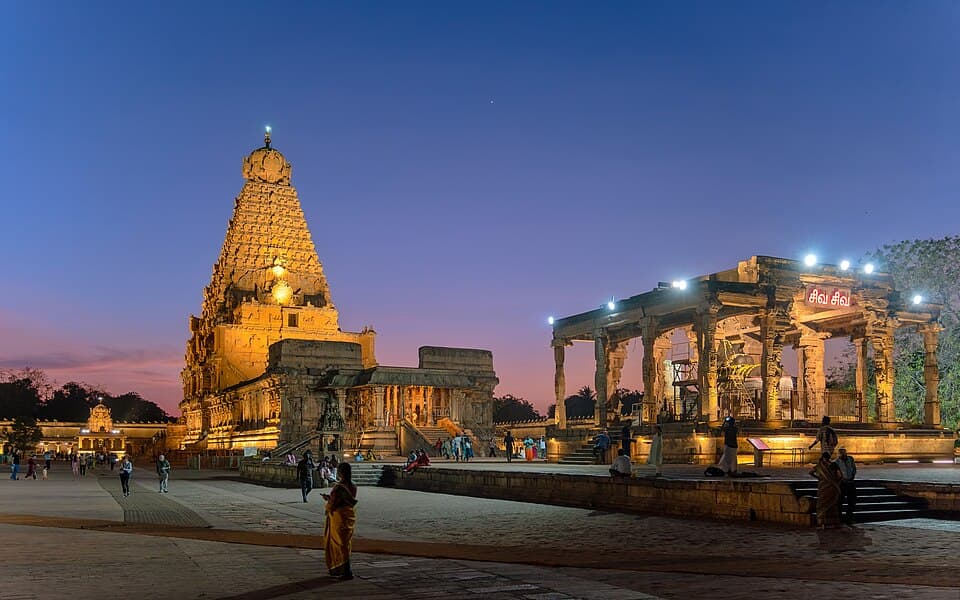
UNESCO records Brihadisvara at Thanjavur as consecrated in Rajaraja I's 25th regnal year, 1009-1010 CE, and describes later additions in its courtyard. Do not transfer the principal shrine's date to every pavilion or wall. Note seams and changes of material as questions for a site history, not proof of chronology.
Field exercise: label the photograph
In the Thanjavur photograph, locate the tiered sanctum tower and the separate pillared pavilion. Label their visible position and form, then compare the official site description. Do not assign the pavilion the same date merely because it appears in the same frame.
Common Mistakes
- Calling every tall tower a gopura.
- Equating a style label with one dynasty.
- Giving all buildings in a complex one construction date.
Glossary
- Garbhagriha
- The sanctum; observe access restrictions.
- Mandapa
- A hall or pillared pavilion associated with a temple.
- Vimana / gopura
- In southern usage, a sanctum superstructure / an entrance gateway; verify local terminology.
Next Steps
- Annotate three photographs on your sketch plan.
- Compare your observations with a UNESCO site description and mark unresolved building phases.
Primary References
- UNESCO: Great Living Chola Temples
Site-level history and architectural context for Thanjavur, Gangaikondacholapuram and Darasuram; not a transcription corpus.
- UNESCO: Group of Monuments at Pattadakal
Official description of architectural diversity at the Chalukya site; not a universal style-identification chart.
- UNESCO: Sun Temple, Modhera and its adjoining monuments
India's submitted Tentative List description, not a World Heritage inscription decision.